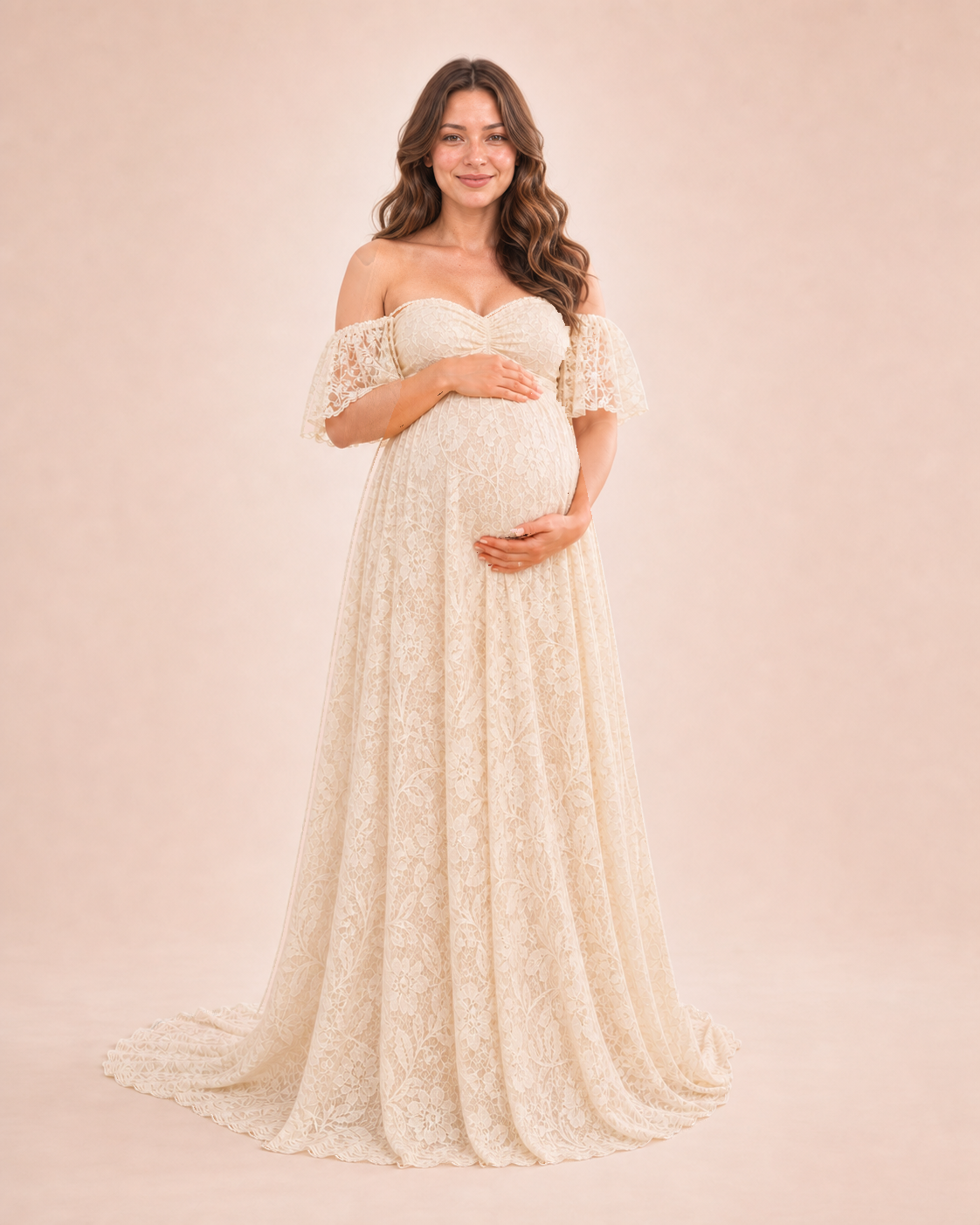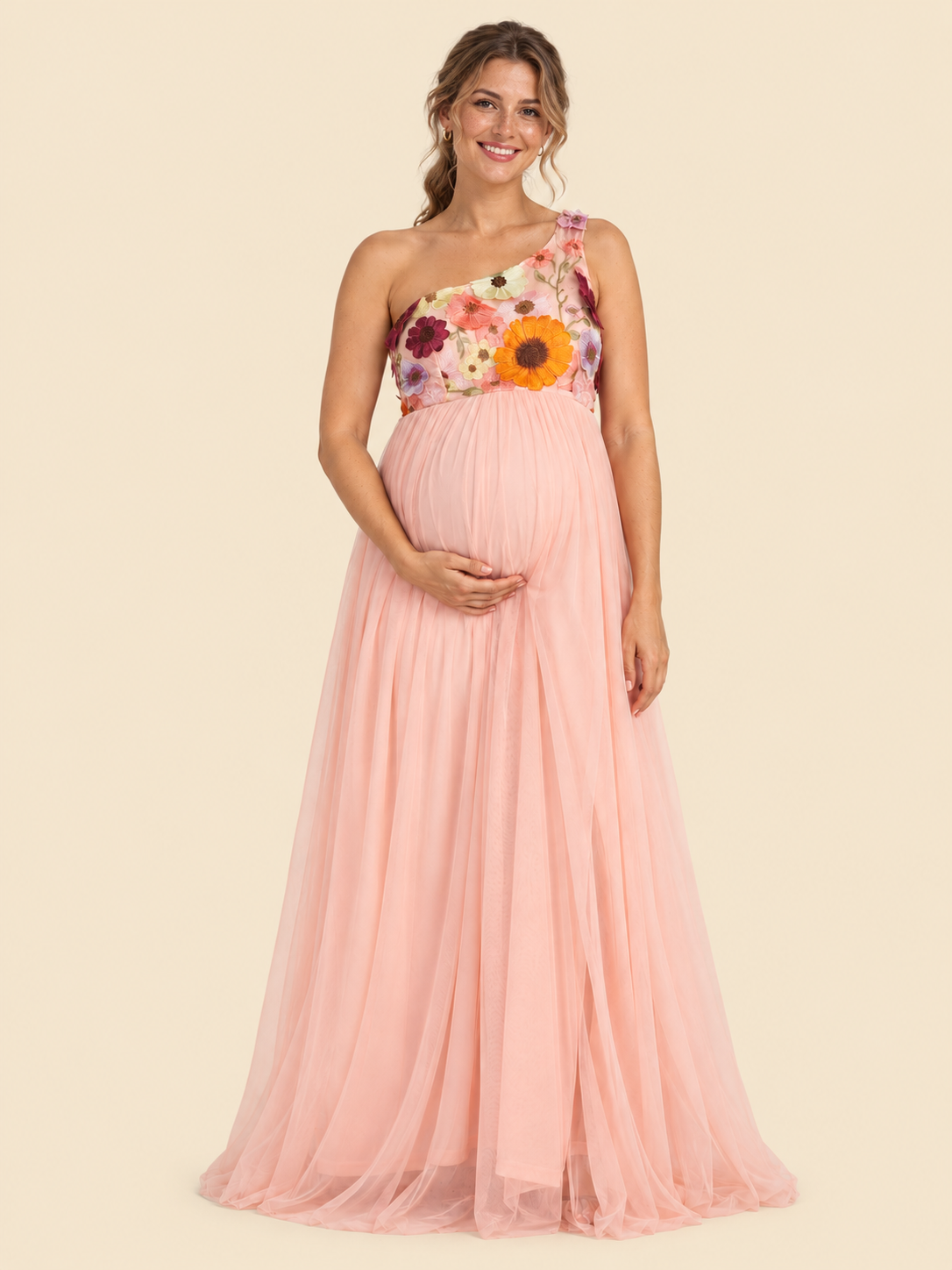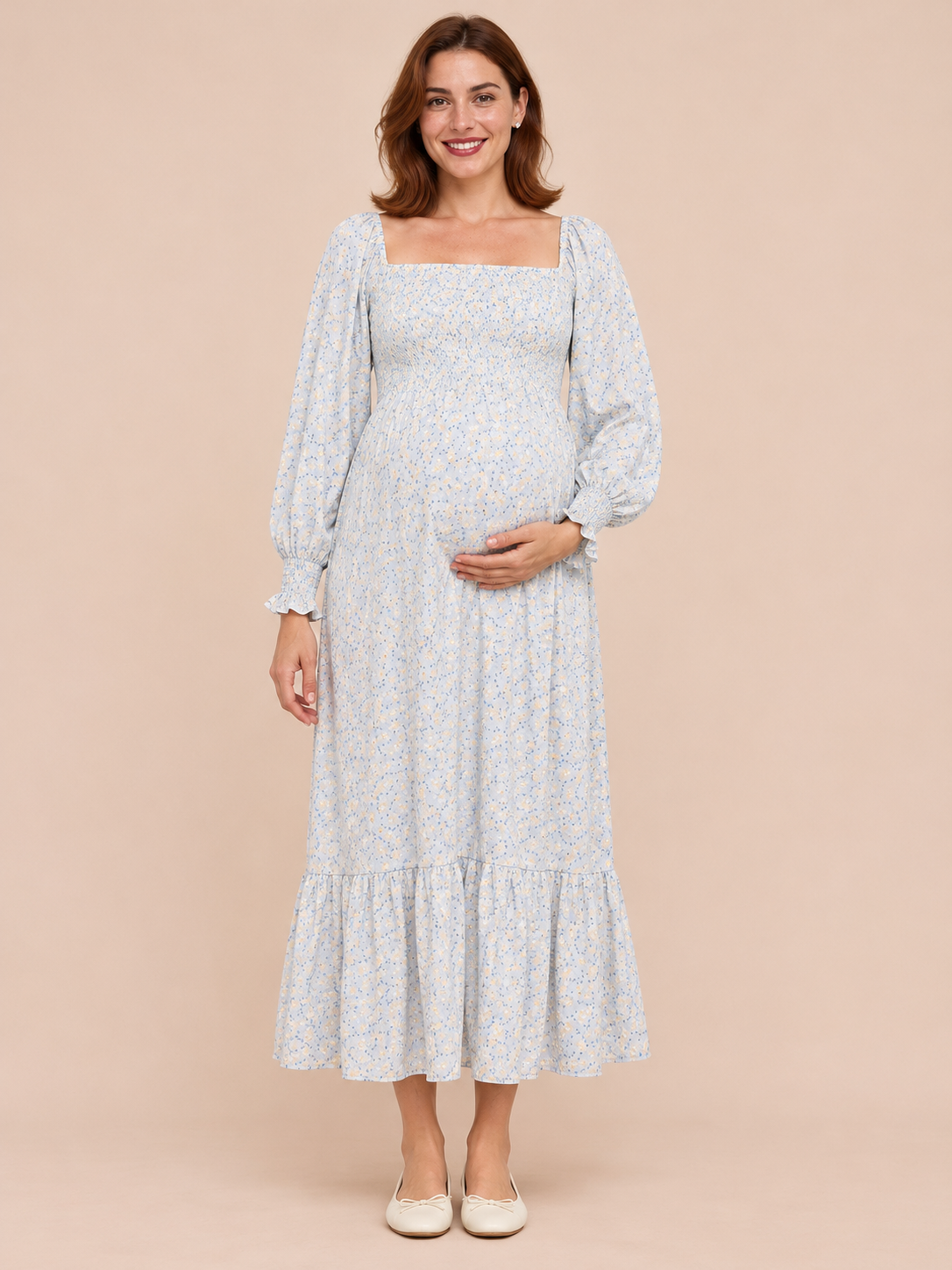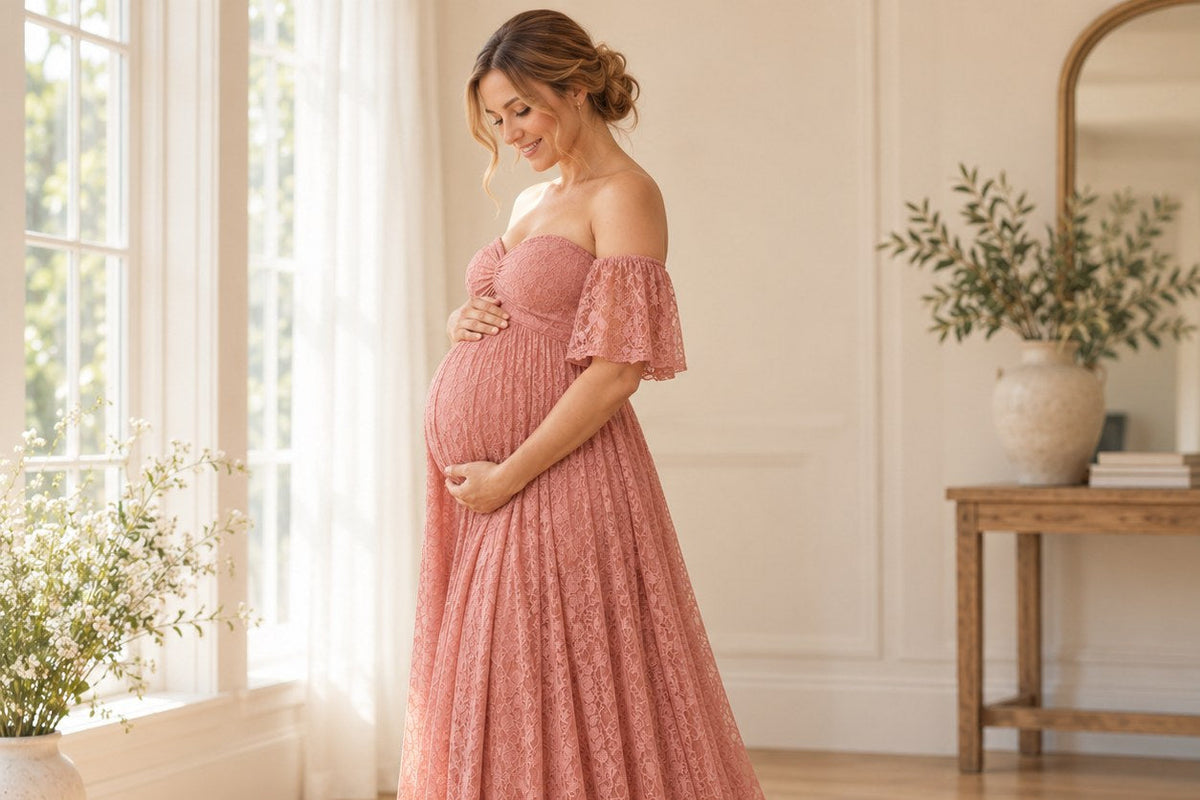
An empire waist maternity dress should have its empire seam resting below your bust and above your bump, without cutting across the fullest part of your bust. The style name is a useful starting point, but the real answer comes from the seam’s position on your body, viewed from both the front and the side.
That small check can make the rest of the day feel easier. When family gathers, the light is lovely, and someone is already reaching for a camera, you want to be present for the hugs and photos—not wondering whether the bodice has shifted.
Where Should an Empire Waist Maternity Dress Sit?
The under-bust seam should sit fully beneath your bust, close to the rib cage, while the skirt opens above your bump. It should not run across breast tissue or depend on the growing bump to hold it in place.
Stand naturally rather than lifting your chest or pulling the skirt down. Look at the seam straight on, then turn to the side. A clear side view often reveals whether the front of the seam is tucked beneath the bust or climbing upward. If you are comparing baby shower dresses, save front and side images of each serious option so you can compare structure rather than just color.
Remember that “maternity” describes the intended design, not your exact fit. Our guide to what maternity and bump-friendly labels really tell you explains why a label cannot replace the measurements and construction of a particular dress.
How Can You Tell If the Under-Bust Seam Is Too High or Too Low?
A seam is likely too high for you if it crosses the fullest part of your bust; it may be too low if it floats well below the bust and drops toward the top of the bump. Treat those signs as reasons to examine the bodice, not as a verdict based on one photo.
| What you notice | What to consider | What to check next |
|---|---|---|
| The seam crosses the bust | The bodice may be too short for your torso, or the bust may be pulling the seam upward | Bust range, bodice depth, and the side view |
| The seam sits well below the bust | The bodice may be too long, or the neckline and straps may be sitting differently than intended | Neckline position, shoulder fit, and where the skirt begins |
| The front looks right but the side angles upward | There may be tension through the bust or rib cage | Back view, side seam, and comfort while sitting |
| The seam moves noticeably when you raise your arms | The whole bodice may be shifting with movement | Recheck the neckline, seam, and hem after your arms come down |
Public discussions often include moms-to-be asking why an empire seam landed across the bust instead of beneath it. That experience is useful as a reminder to inspect the actual dress, but it does not mean every empire-waist style will fit the same way.
Which Measurements Matter on a Maternity Dress Size Chart?
Start with your bust circumference and the dress’s bust range, then look for bodice depth or shoulder-to-seam length. Front and back length matter too, because a change at the shoulder or bodice can change where the hem lands.
First, measure your bust at its fullest point while wearing the support you expect to wear to the event. Then compare that number with the chart’s label: body measurements describe you, while garment measurements describe the dress. A fuller A-line skirt may leave room around the bump, but that space does not correct a bodice that is too tight or an under-bust seam that is misplaced.
Also plan for your week at the event, not only the day you order. There is no single size for a certain trimester or week, so use the information for that particular style and your current measurements. If you would like another set of eyes on the available details, visit Size & Fit Help.
What If the Product Page Does Not List Bodice Depth?
If bodice depth is missing, use the measurements and multiple views that are available to narrow the uncertainty, then ask about the missing distance before buying if it could change your decision. Avoid inventing a shoulder-to-seam number from a styled image.
The Elowen Merlot Keepsake empire-waist dress is a clear example of what a page can and cannot tell you. It lists S–XL, a bust range, front length, back length, and sleeve measurement for each size. It also describes an off-shoulder sweetheart neckline, flutter lace sleeves, an empire waist above the bump, and a full-length A-line skirt. It does not list bodice depth or shoulder-to-seam length.
With that information, you can compare your bust with the stated range, study the front and side views, and note the longer back length. What you cannot settle from the listed fields alone is exactly where the seam will meet every torso. A useful customer-service question is: “What is the vertical distance from the shoulder to the empire seam in size M?” Replace the size with the one you are considering.
Can Adjustable Straps Fix an Empire Seam?
Adjustable straps can sometimes change the vertical position of a bodice, but only when that specific dress is described as having adjustable straps. Even then, moving the straps changes more than the seam, so reassess the neckline, coverage, and hem together.
Shortening a strap may lift a low seam while also raising the neckline and shortening the dress. Lengthening it may lower a high seam while lowering the neckline and bringing the hem closer to the floor. Try small changes, stand normally, and look from the front and side after each one.
Fixed straps, off-the-shoulder sleeves, and a wrap-look bodice are different structures; none should be treated as an adjustable strap unless the description says so. After any adjustment, use this guide to check neckline and bra compatibility before deciding that the fit is settled.
Does a Lace Maternity Dress Fit Differently from Tulle, Chiffon, or Satin?
Fabric changes drape, texture, and movement, but it does not prove that an empire seam will land in the right place. Lace, tulle, chiffon, satin, lining, or open mesh should be assessed separately from bodice depth and bust fit.
When browsing lace maternity dresses, look at where the structural seam sits beneath the decorative layer. For tulle or chiffon, notice whether volume makes the seam harder to see. With satin, changing light may emphasize folds, so use both a straight-on view and a side view. These are visual checks, not reasons to assume a fabric will fit a certain way.
The same distinction applies to stretch, smocking, a wrap construction, or a zipper. Stretch in the skirt does not establish stretch in the bodice; smocking in one panel does not create equal room everywhere; and a wrap detail may be decorative or functional. Let each stated feature answer only the question it actually addresses.
How Should You Test Maternity Special Occasion Dresses Before the Event?
Try the dress at home with its tags attached, using the bra, shoes, and underlayer you expect to wear, then check the seam while standing, sitting, and raising your arms. Finish by looking once in natural light and once with camera flash so you can judge the full outfit before a baby shower, maternity photoshoot, wedding, Thanksgiving gathering, or holiday party.
- Stand naturally and confirm that the empire seam remains below the bust from the front and side.
- Sit in a chair similar to the event seating and check the neckline, rib-cage area, and skirt position.
- Raise your arms as if hugging someone or reaching for a decoration, then see where the seam and hem return.
- Walk in your event shoes and check a maxi or empire waist maternity gown from the front, side, and back.
- Take one natural-light photo and one flash photo, then review the seam, neckline, and overall coverage.
For timing, BabyShowerDress offers free shipping on every order, to every destination we ship to. Processing takes 2–4 business days, followed by 5–8 business days in transit, or about 7–12 business days in total; order at least three weeks before your event. You may try a dress on at home and request a return within 30 days of delivery if it remains unworn outside the home, unwashed and unaltered, with tags and packaging intact, and otherwise meets all condition requirements in the Return & Refund Policy. For a size-related or change-of-mind return, you pay the return shipping.
If standing, heat, swelling, or another physical concern affects your event plans, ask your doctor or midwife for guidance. Your clothing check can focus on how the dress feels and moves during a short try-on.
Frequently asked questions
These quick answers cover the questions people often ask while deciding whether an empire-waist style belongs on their try-on list.
Why are maternity dresses all empire waist?
They are not all empire waist. The shape is common because the skirt can open above the bump, but maternity dresses also use A-line, wrap, fitted, smocked, and other constructions. Whatever the label, check the bust and the actual seam position.
What body type should wear an empire waist?
Any mom-to-be who likes the shape can consider it. The more useful question is whether the under-bust seam, bust range, bodice depth, neckline, and length work for your proportions and preferences.
What is the most flattering dress to wear during pregnancy?
Choose the dress that fits your body, suits the occasion, and lets you sit, walk, and celebrate without constant adjustment. A clear fit check is more useful than a universal rule about one silhouette.
What week of pregnancy do you start wearing maternity clothes?
There is no required week. You can begin when your current clothes no longer feel or fit the way you want, and choose an event dress using your week at the event plus the measurements provided for that style.
An empire waist maternity dress can frame a meaningful day beautifully when the seam, bodice, neckline, and length work together on you. As you browse baby shower dresses, begin with the front and side seam check, then choose the color and details that feel right for the photos and people you will remember.