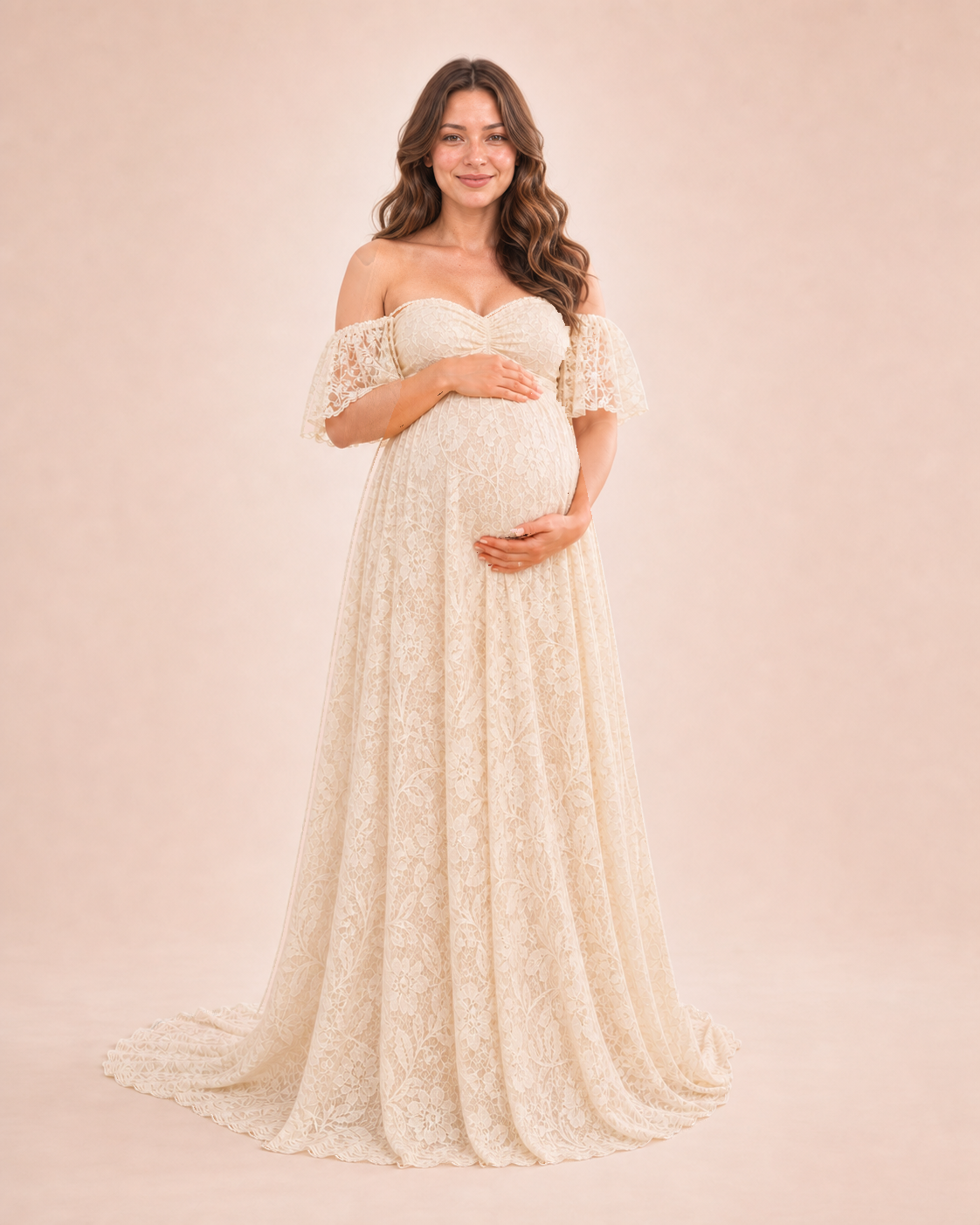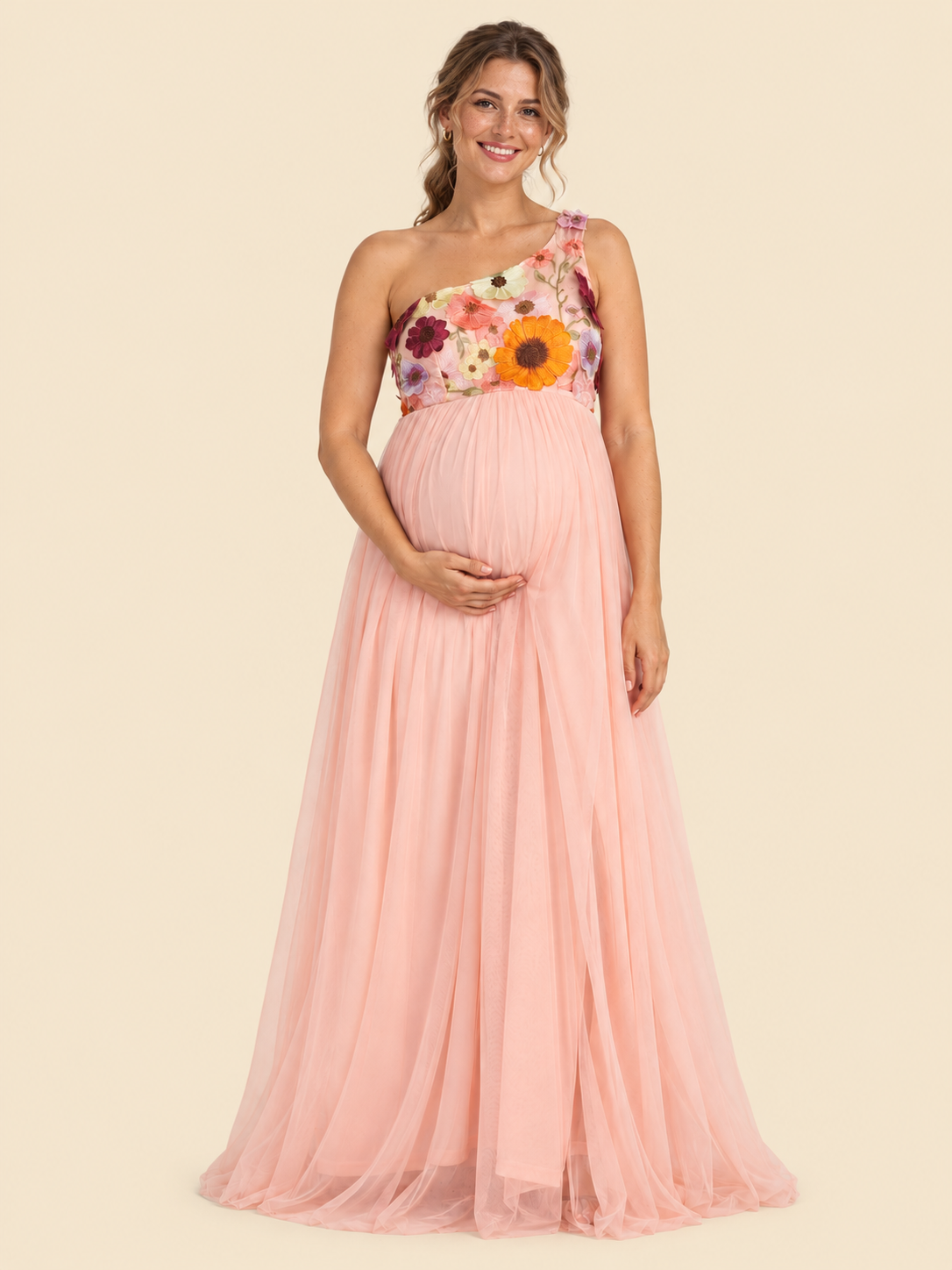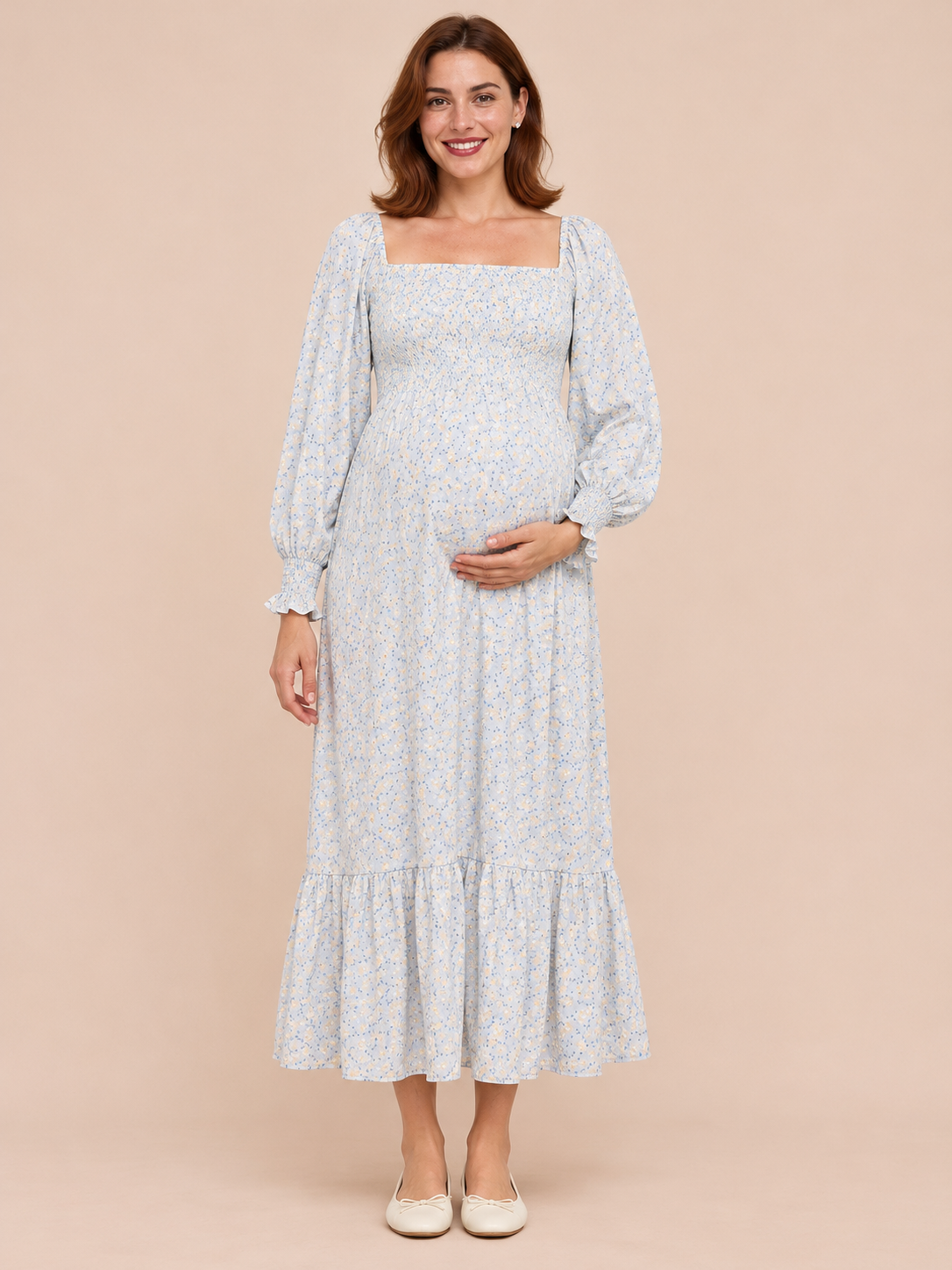
A maternity wrap dress can be a true wrap that opens and reties, or a faux wrap with a sewn crossover that only looks adjustable. Before you choose a pregnancy wrap dress for a baby shower, holiday party, or wedding, check the closure, the tie, the fabric notes, the lining, and the size fields in that order. Those details tell you what you can adjust on the day and what you should plan to wear underneath.
Is a maternity wrap dress truly adjustable? Check the closure first
Look for words that describe how the dress opens, not only how the front looks. A true wrap usually has panels that cross and a tie you can loosen and retie. A faux wrap has a stitched crossover, so the waist shape stays fixed even when a belt or bow is visible.
Then look for any second closure. A hidden snap can hold the crossover in place, while a zipper, button, or pull-on design changes how you put the dress on. “Front tie” and “side tie” describe where a tie appears; they do not automatically tell you whether the tie changes the fit. If the listing does not explain the construction, treat the structure as unknown and choose a style with clearer details.
For a quick comparison, save these terms while you shop:
| Words you see | What to find out | What it means for your plan |
|---|---|---|
| True wrap | Does the front open and retie? | Allow time to tie it at the waist and arrange the neckline. |
| Faux wrap or wrap-detail | Is the crossover sewn in place? | Choose by the fixed bust and waist measurements, not by the bow alone. |
| Front tie or side tie | Does the tie pass through a tunnel or anchor? | Confirm whether it is functional or decorative. |
| Hidden snap, zipper, button, or pull-on | Where does the garment actually open? | Plan the order of dressing and any layer underneath. |
For a wider starting point, browse all baby shower dresses, then apply the same questions to each style.
True wrap vs. faux wrap: choosing a pregnancy wrap dress for movement
A true wrap gives you a retie point; a faux wrap gives you a set crossover. Neither label alone tells you how the neckline or skirt will feel during a hug, a seated photo, or gift opening, so plan a calm movement check at home.
Put the dress on over the undergarments you expect to wear. Stand, sit in a chair, lift your arms as if reaching for a balloon, bend slightly to pick up a gift, and give someone a gentle hug. Notice whether the crossover stays in the position you tied, whether the bust feels open when you sit, and whether the skirt still falls where you expect. You are learning how this garment behaves on your body, not trying to prove a universal result.
A true wrap may need a small retie after movement. A faux wrap may feel simpler to put on, but its fixed overlap makes the size chart and bust measurements especially important. If you have a body-related concern, pain, or pressure, ask your doctor or midwife before deciding what to wear.
For a fuller conversation about sitting, hugging, and opening gifts, read the earlier guide to movement checks in a baby-shower dress.
Does the tie change the fit, or is it only decoration?
Trace the tie with your fingers and see where it goes. A functional tie usually passes around the body, through an opening, or around an inner panel; a decorative bow may be attached to a seam and change only the appearance.
Read the closure notes beside the garment photos and look for a diagram or close-up. Check whether the page names a hidden snap, an inner tie, a zipper, or buttons. Also note whether the fabric is described as stretch or non-stretch. A tie can change the wrap position, but it cannot create stretch where the fabric has none.
Keep a small note on your phone with four lines: opening, tie path, stretch, and lining. If one line is not provided, leave it blank instead of filling the gap with a guess. This makes comparing a pregnancy wrap dress with a surplice or pull-on style much easier.
Which garment details should you verify before choosing a maternity holiday dress?
Start with the fields that affect how the dress meets your body on the event date: fabric, lining, stretch, bust or bump measurements, and length. A lace, tulle, chiffon, or satin label tells you about the fabric or finish only when that specific listing names it; it does not describe every maternity dress in a collection.
Use the Size & Fit Help guidance to choose for your week at the event, your height, and the fullest part of your bump. Compare those details with the individual size chart and model reference. If the chart gives bust, bump, or length measurements, write down the one that matters most for your planned shoes and venue. If a field is missing, treat that as a reason to ask before ordering.
For texture or a more delicate finish, you can explore lace maternity dresses. The collection name is a route to browse; the exact fabric, lining, and stretch still belong to each individual listing.
How should a long sleeve wrap maternity dress match the venue?
Let the room and the photographs guide the silhouette. A V-neck or square neck can read polished at a hotel dinner; a sweetheart neckline can suit a softer shower setting; long sleeves may feel visually right for an indoor holiday gathering, while short sleeves or sleeveless shapes can work when the room is warm. These are styling choices, not promises about temperature or comfort.
For a Thanksgiving gathering or a December party, consider the walk from the car, the coat you will remove, and how much time you will spend seated. For a wedding guest look, check the invitation’s dress code before choosing lace, tulle, chiffon, or satin. For a baby shower, think about the backdrop: flowers, balloons, and natural light can make a clean neckline and a visible tie easy to read in photos.
If you are shopping specifically for a long sleeve wrap maternity dress, compare the sleeve description and the closure description separately. A long sleeve changes the arm coverage; it does not tell you whether the wrap is true or faux. Our holiday party maternity dresses collection can help you browse the occasion first, then return to the construction details.
What should you check at home before the event?
Try the dress indoors as soon as it arrives, while it is still in return-ready condition. Keep the tags and packaging, use clean hands, and test it over the undergarments and shoes you expect to wear. Look at the neckline and overlap in natural light, then once with flash or a phone light, because a camera can read layers differently from your eyes.
- Confirm the opening: retie, snap, zipper, button, or pull-on.
- Repeat the stand, sit, reach, bend, and hug movements.
- Check the tie after each movement and note whether you would want a small camisole or other layer.
- Compare the fit with the size chart for your event-date week, not only today’s measurements.
- Save the tags and packaging until you are happy with the choice.
BSD’s return policy allows a return within 30 days of delivery when the dress is unworn, unwashed, unaltered, and returned with tags and packaging; trying it on at home is allowed. For a size exchange, the customer covers the return shipping, and the replacement is sent after the original arrives, subject to stock. Read the shipping policy before you order so the timing fits your calendar.
How much order time should you leave for an event date?
Leave at least three weeks before the event when you can. BSD lists 2–4 business days for processing and 5–8 business days for U.S. shipping after dispatch, or about 7–12 business days in total; the extra room gives you time to try the dress and handle a size change.
Write the event date at the top of your comparison note, then count backward. Include the week of pregnancy you expect to be on that date, your height, and your bump measurement. If the calendar is tight, choose a style whose closure and size fields are clearly described rather than relying on the word “wrap” alone. Shipping is free on every order to destinations BSD serves, but the three-week planning recommendation still matters for fitting time.
Frequently asked questions
These quick answers cover the questions this guide addresses when comparing a maternity wrap dress for a celebration.
What is the difference between a true wrap and a faux wrap maternity dress?
A true wrap opens and can be retied around the body. A faux wrap has a sewn crossover, so the overlap is fixed; check the bust, bump, and closure details instead of assuming the bow is adjustable.
How do I keep a wrap dress’s neckline secure?
Follow the closure instructions and try the dress while sitting, reaching, and hugging. A hidden snap or inner tie may hold a crossover in place when the listing says it is included; if the neckline still feels open or uncomfortable, ask your doctor or midwife about your concern and choose another style if needed.
Which fabric should I consider for a wrap dress?
Start with the fabric named for that specific style, then check whether lining and stretch are stated. Lace, tulle, chiffon, and satin can look very different in a venue and in photographs, so compare the details and the dress code instead of assuming one fabric works for every event.
Can you wear a wrap dress while pregnant?
A wrap silhouette can be considered during pregnancy, but the useful question is how that particular closure, fabric, and size chart meet your body at the event date. Try the dress at home and ask a doctor or midwife about any health or body concern.
How early should I order a dress for my event date?
Plan for at least three weeks when possible. Processing is listed as 2–4 business days and U.S. shipping after dispatch as 5–8 business days, with room left for an at-home try-on or exchange.
The dress you remember is the one that lets you stay in the moment: greeting family, opening gifts, and looking back at the photographs with a smile. Start with the closure, compare the details that are actually provided, and browse all baby shower dresses when you are ready to find a silhouette for your celebration.
For a related read, see the guide to reading product details before choosing a maternity baby-shower dress.