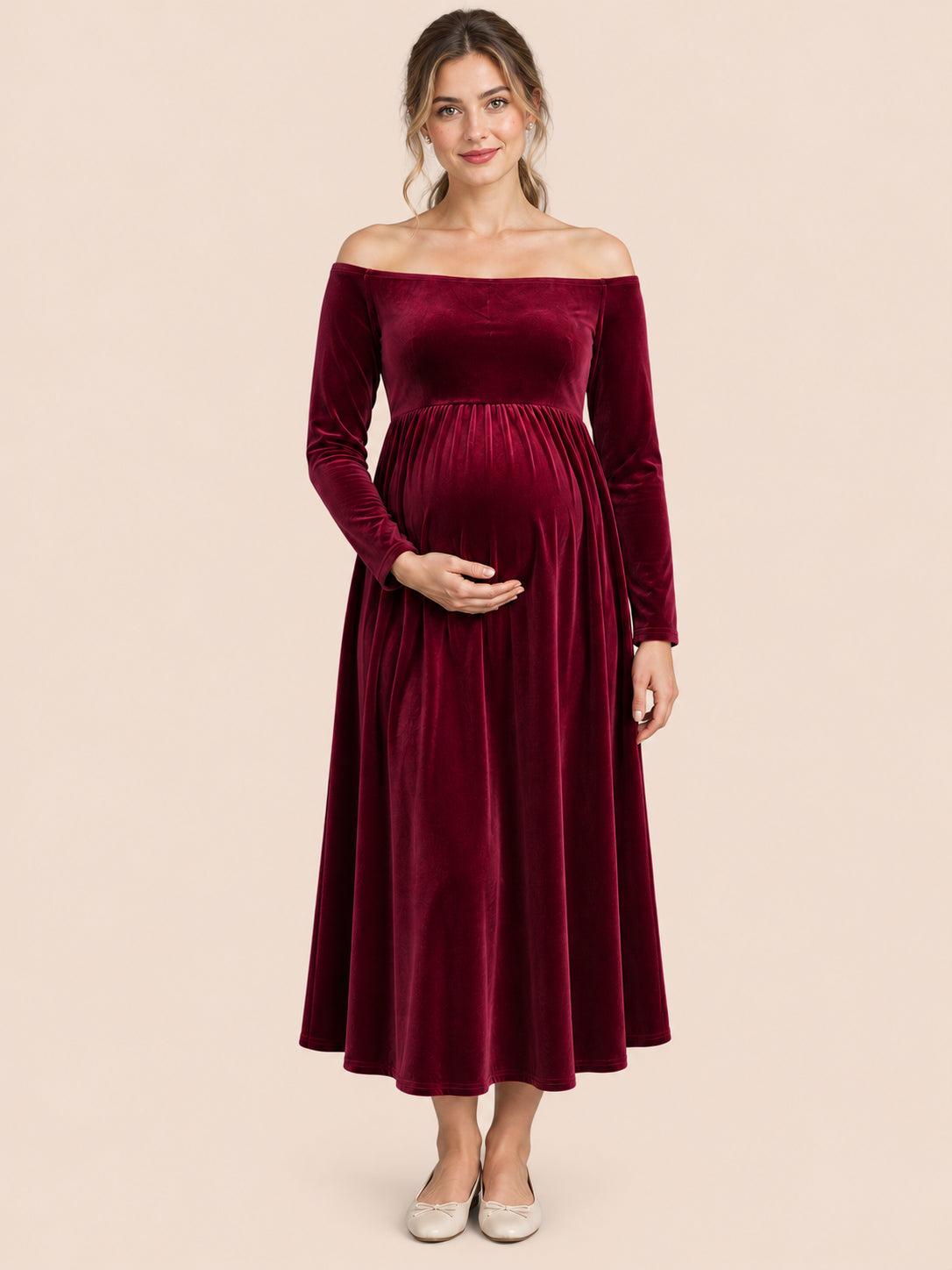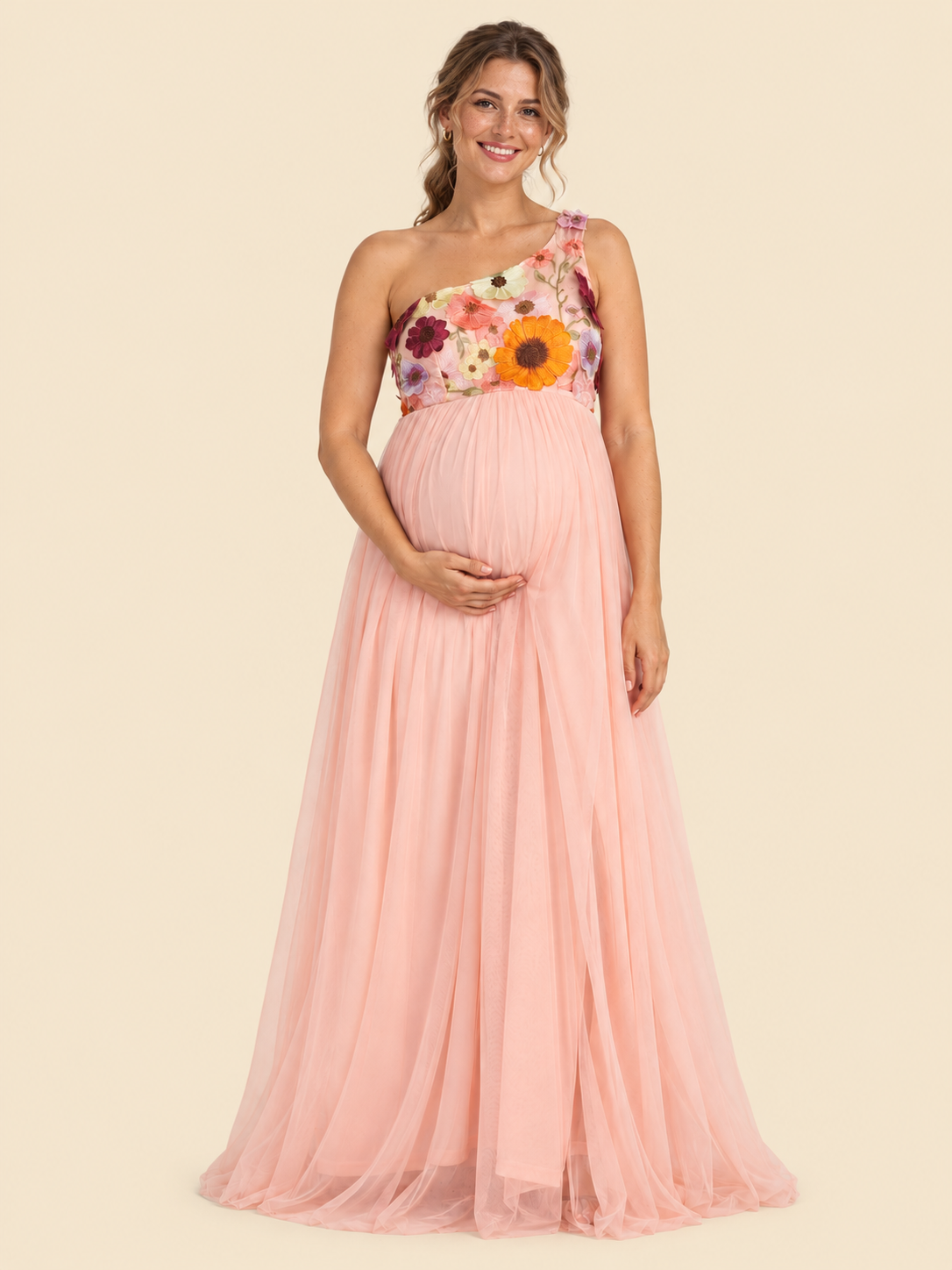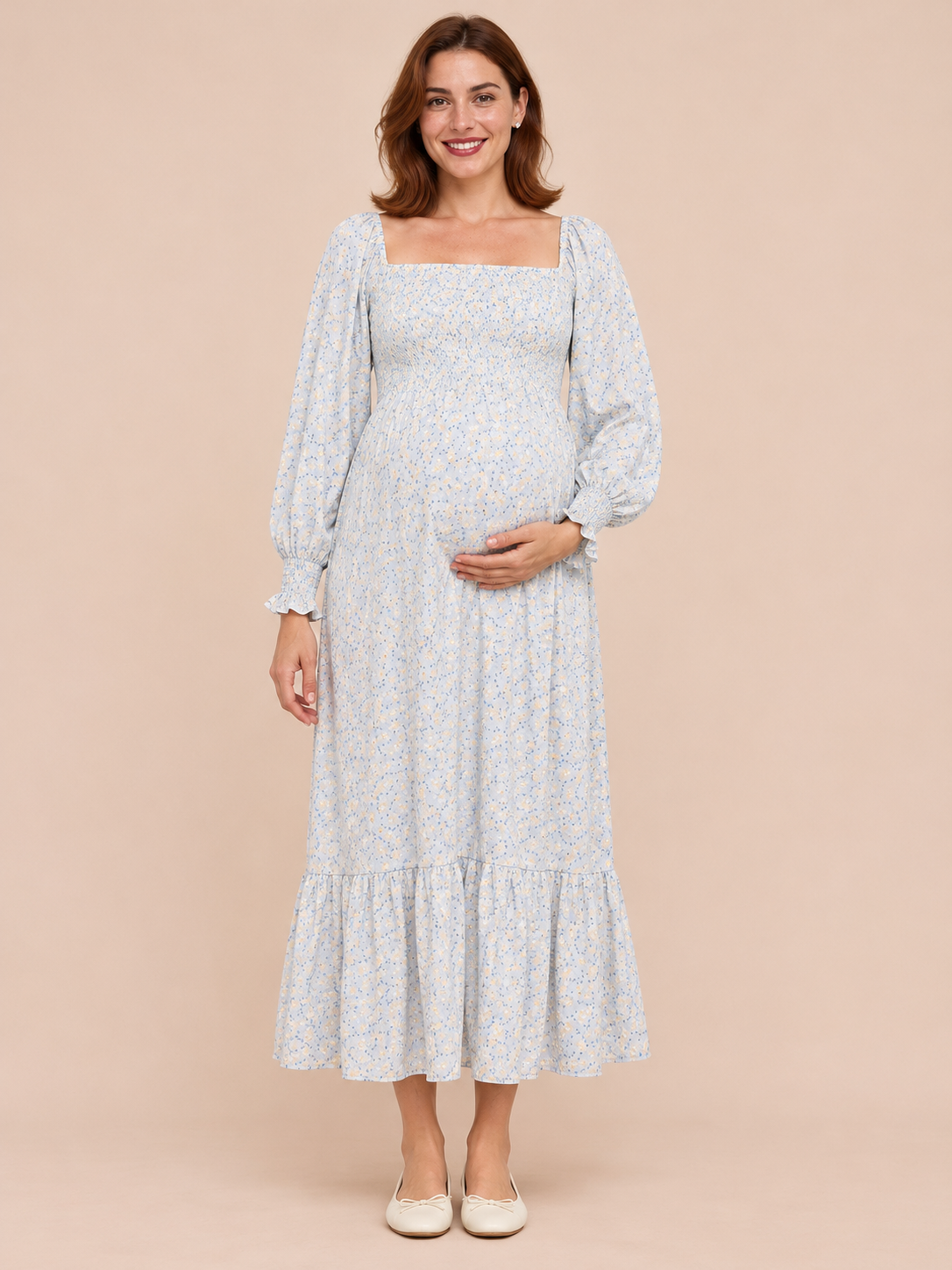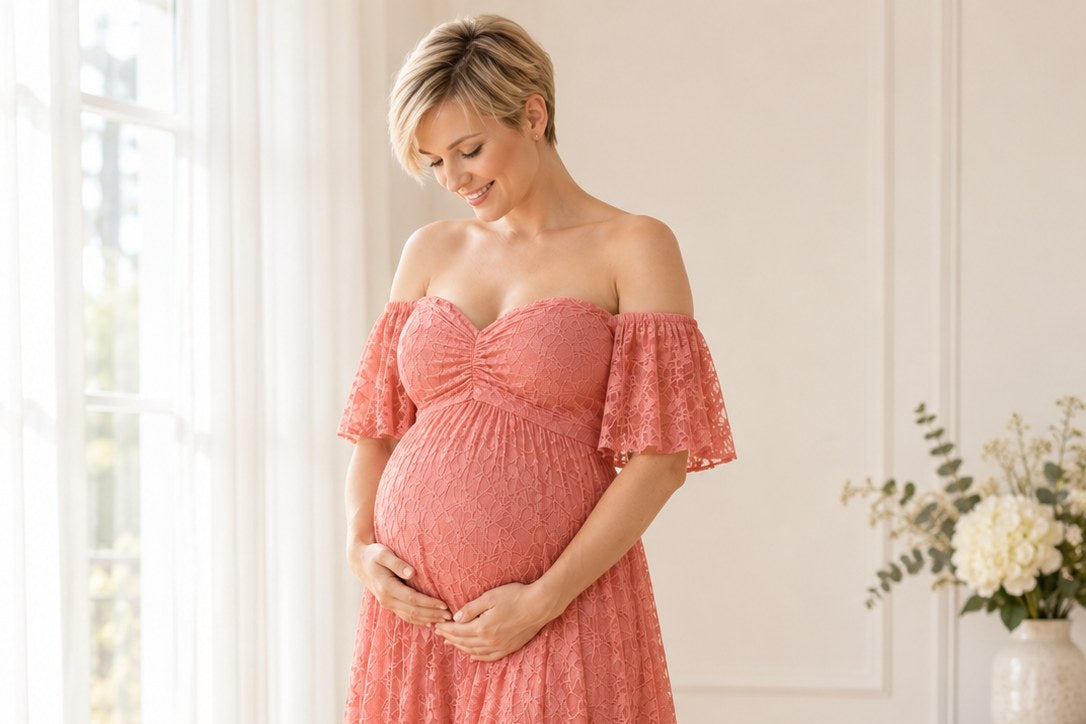
A ruched maternity dress can stay in place, but ruching alone does not tell you whether the fabric stretches, the folds adjust, or the dress will shift after you sit and walk. Look at how the folds are made, where they begin and end, and what happens when you move. As you compare baby shower dresses, that simple check can help you choose a dress that lets you focus on the hugs, photos, and people gathered around you.
What Is a Ruched Maternity Dress?
A ruched maternity dress has fabric gathered into folds, usually along a seam, casing, or tied channel. The word ruched describes the look and construction of those folds; it does not automatically mean the dress is stretchy or adjustable.
Three constructions can look similar in a still photo while behaving differently:
| Construction | What creates the folds | What to look for |
|---|---|---|
| Fixed gathers | Fabric sewn into a fixed seam | The folds keep their designed length; adjustment depends on other parts of the dress. |
| Elastic ruching | Elastic thread or an elastic casing | The gathered area may stretch, but its range depends on the construction and fabric. |
| Drawstring or adjustable tie | A cord or tie running through a channel | You may be able to change the gathered length or fullness where the tie operates. |
Start with close-up photos and the construction description. Words such as fixed seam, elastic casing, drawstring, and adjustable tie tell you more than the ruched label by itself. Also identify the closure—such as a zipper, buttons, or a pull-on bodice—because that may control fit more than the folds do.
Where Should Ruching Sit on a Maternity Dress?
Ruching should sit where that particular design intends it to sit, with the beginning and end of the gathered section still visible in their expected places. Compare the bust, waist seam, side seam, and under-bump area rather than assuming every ruched dress should fall the same way.
On side-ruching designs, look at whether the folds begin near the bodice, continue beside the bump, and end where the photos show them ending. For bust ruching, check that the gathering stays within the bodice instead of being pulled downward by the skirt. If an empire waist seam is part of the design, notice whether it remains in the intended position when you turn to the side.
The neckline matters too. An off-the-shoulder or one-shoulder bodice can create a different line of tension from a V-neck or square neck. When browsing off-shoulder maternity dresses, treat the neckline as one feature and the ruching as another; a collection can include many constructions, not only ruched styles.
Use front and side views together. A front photo can show symmetry, while a side view reveals whether the folds frame the bump, bunch close to the bust, or collect below the intended area. If the exact start and end points are unclear, that is a useful question to ask before choosing.
Does a Maternity Ruched Dress Stretch?
A maternity ruched dress stretches only when its fabric or gathered construction provides stretch. Ruching can add visual and physical fullness, but folds sewn into a non-stretch fabric do not turn that fabric into a stretch knit.
Read the fabric information separately from the design name. Jersey and rib knit may be made with stretch, while mesh, tulle, chiffon, satin, lace, and velvet can vary widely depending on their fiber content, backing, and construction. A mention of spandex or elastane can support stretch, but you still need to know where that fabric is used and whether the lining stretches with it.
Then ask what actually adjusts. Elastic ruching may expand and recover. A side drawstring may change the length of the gathered section. Fixed gathers may simply provide shaped fullness. For a deeper look at how fabric can change with wear, read Will a Stretch Maternity Dress Stretch Out Over Time?
Will the Ruching Stay Put After You Sit or Walk?
A still product photo cannot show whether ruching will stay in its intended position after movement. The most useful answer comes from a short try-on check that includes the motions you expect at your shower or photoshoot.
- Stand naturally and note where the top and bottom of the ruching sit.
- Turn to the side and check the side seam, waist seam, and under-bump area.
- Sit as you would while opening gifts, then stand without first rearranging the dress.
- Walk several paces, reach forward for a gift, and raise your arms as if greeting someone.
- Look again from the front and side. Notice whether the folds returned, shifted upward, twisted, or pulled the hem.
Try this in the undergarments and shoes you plan to wear. Check once in natural light and once with your phone flash, because photos can reveal bunching, lining edges, or tension that feels less noticeable in a mirror. You are not looking for a motionless dress; you are deciding whether any adjustment feels easy and occasional or likely to interrupt your celebration.
One commenter in a public forum said the ruching on a similar dress slid upward once her bump was there. That single experience cannot predict how another dress will behave, which is why your own movement check matters more than the label. For more ideas tied to the day itself, see Sitting, Hugging, Opening Gifts: Will Your Dress Stay Comfortable?
How Is a Long Sleeve Ruched Maternity Dress Different?
A long sleeve ruched maternity dress adds shoulder and arm movement to the fit check. When you raise your arms, the sleeves can pull on the bodice, which may change the neckline, waist seam, side ruching, or hem even when the gathered section itself is fixed.
Reach forward, lift both arms, and then let them fall naturally. Watch whether the bodice settles back into place and whether the side seams remain reasonably straight. A fitted sleeve, bishop sleeve, and stretch-knit sleeve can each move differently, so use the construction details for the dress you are considering rather than the sleeve name alone.
For a winter baby shower or holiday gathering, also think about the room and your planned layers. Try the dress with the coat, wrap, or bra you expect to wear so you can see whether added layers change the bodice. You can browse long sleeve maternity dresses by silhouette, then apply the same arm-and-ruching check to any style you like.
What Should You Check on a One Shoulder Ruched Maternity Dress?
On a one shoulder ruched maternity dress, first separate the shoulder structure from the ruching through the torso. Find the main closure and check whether movement at the single shoulder pulls the gathered area upward or across your body.
Raise the supported arm, then the opposite arm, and compare the neckline before and after. Look for twisting at the side seams and a diagonal pull across the bodice. If there is a tie or bow, find out whether it adjusts the shoulder length, changes the bodice fit, or is decorative. Its location does not tell you its function.
Take a front, side, and back photo in the same light. A one-shoulder line is intentionally asymmetrical, so the useful question is not whether both sides match; it is whether the neckline, closure, and ruching return to the position the design shows after you move.
How Do You Choose a Ruched Maternity Dress for Your Event Week?
Choose for your measurements and week at the event, using the size chart for the exact dress. A universal pregnancy-week formula cannot account for differences in bodies, fabrics, linings, closures, or where a design places its ruching.
Write down the event date, your expected week on that date, and the current measurements requested by the dress chart. Compare body measurements with body measurements and garment measurements with garment measurements. If you are between sizes, use the dress-specific guidance and consider which area—bust, bump, shoulder, or length—needs the most room for this design.
Match the construction to what you will actually do. A seated brunch asks you to check the waist seam and under-bump folds while sitting. A maternity photoshoot may make front, side, and flash photos more important. A baby shower with gift opening, hugs, and family pictures calls for the full movement check. If you want help thinking through the chart, use Size & Fit Help.
If any pressure, pain, swelling, overheating, or other physical concern goes beyond ordinary clothing fit, pause the try-on and ask your doctor or midwife. Your dress should support the plans for your day, while health questions belong with someone who knows your pregnancy.
Frequently asked questions
These quick answers keep the construction, fabric, and fit questions separate, so you can compare ruched maternity dresses without asking one detail to tell you everything.
What does ruched mean on a dress?
Ruched means fabric has been gathered into folds. Those folds may be fixed in a seam, held by elastic, or controlled by a drawstring or tie.
Is ruching the same as draping?
No. Ruching uses gathered folds, while draping describes fabric arranged to fall across the body. A dress can use both, but the words describe different construction ideas.
Do ruched dresses stretch?
Some do and some do not. Check the fiber content, fabric description, lining, and whether the ruching uses elastic; the folded appearance alone does not establish stretch.
Which ruching placement should I choose?
Choose the placement that stays where the design intends during the activities you care about. Compare side ruching, bust ruching, and under-bump folds from the front and side, then repeat the check after sitting and walking.
How do I choose the right size for a ruched gown?
Use your measurements and week on the event date with the chart for that gown. Pay particular attention to the bust, bump, shoulder, closure, lining, and length rather than sizing from the word ruched.
The right ruched maternity dress is the one whose construction makes sense to you and whose folds return to a place you are happy with after real movement. When you are ready, explore baby shower dresses by neckline, sleeve, and silhouette, and keep the celebration—not constant adjusting—at the center of your choice.