No — your pre-pregnancy size is only a starting point, not the size to order. Compare your current bust measurement with each style's own size chart instead, since maternity dress sizing is based on the finished garment, not a universal size conversion. There is no reliable chart that turns a regular size into a maternity size across different brands and cuts.
Why Your Old Size Is Just a Starting Point
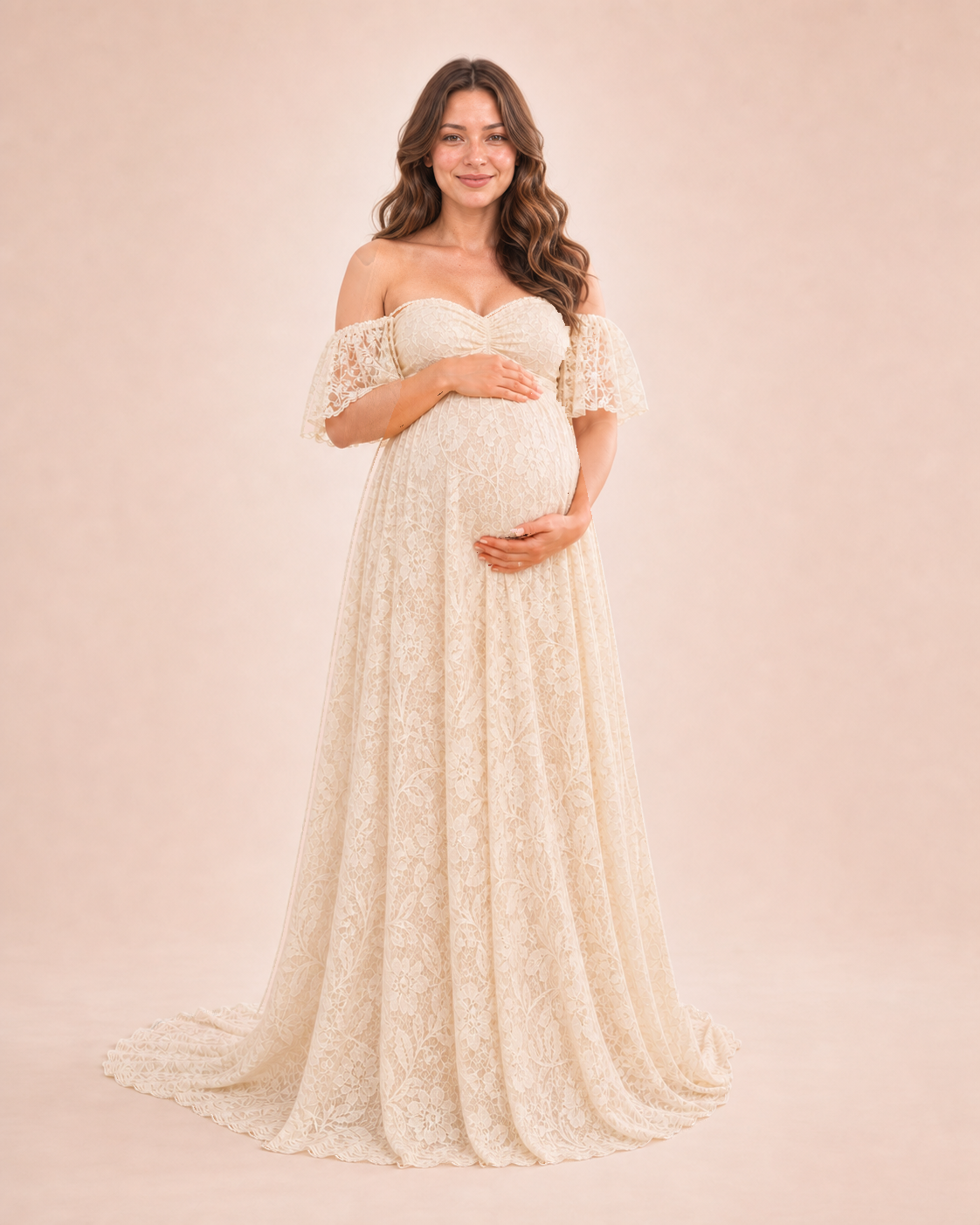
A pre-pregnancy size label was built around your own body and one brand's cut at the time. Once your measurements change, that label no longer describes you, and it never described how a different brand's maternity dress is actually cut in the first place. Two dresses marked the same letter size — like our Ramona Cocoa Embrace below — can measure very differently depending on the maker, the fabric, and how much ease is built into the cut.
Compare Your Current Bust With Each Style's Own Chart
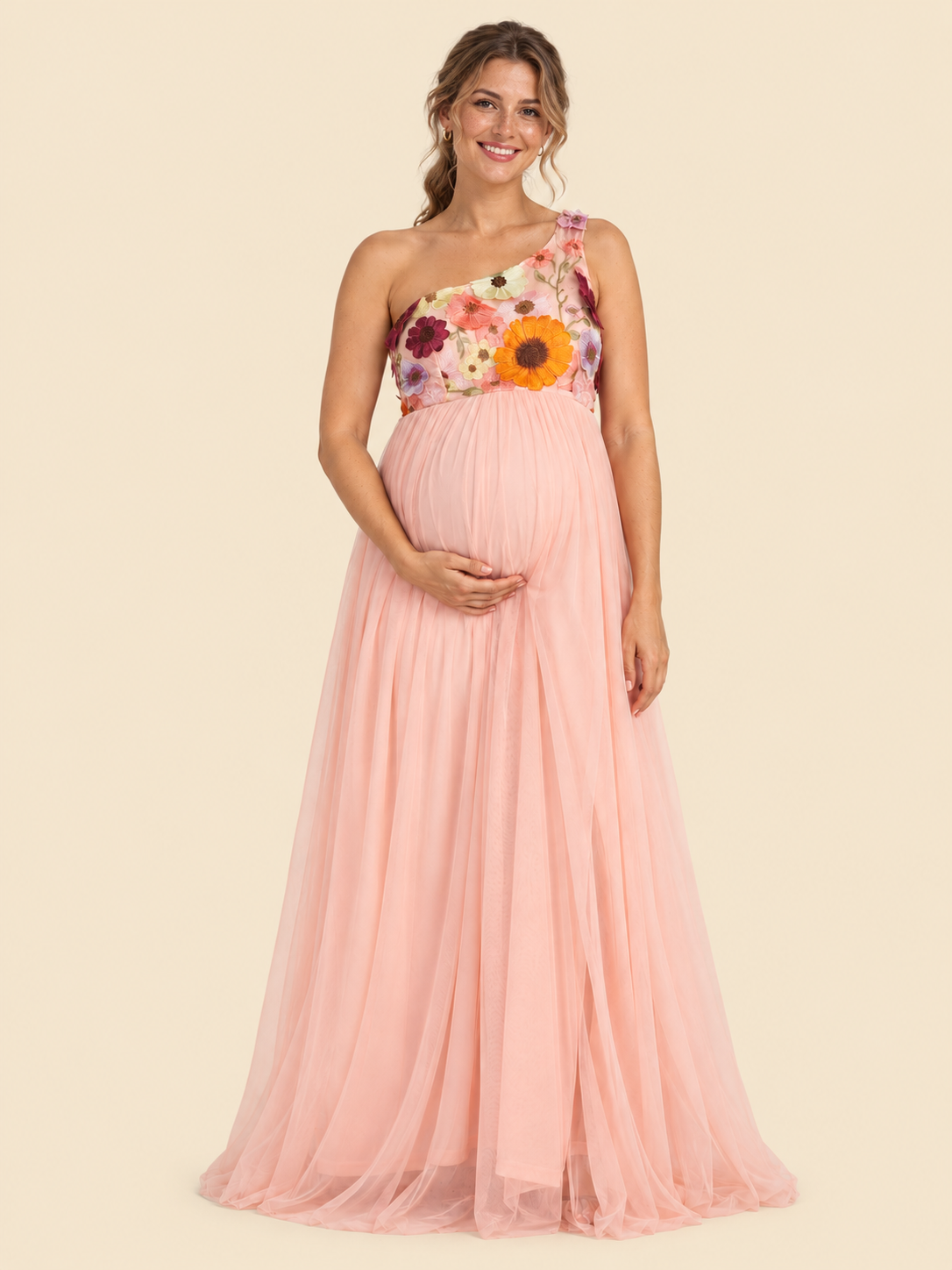
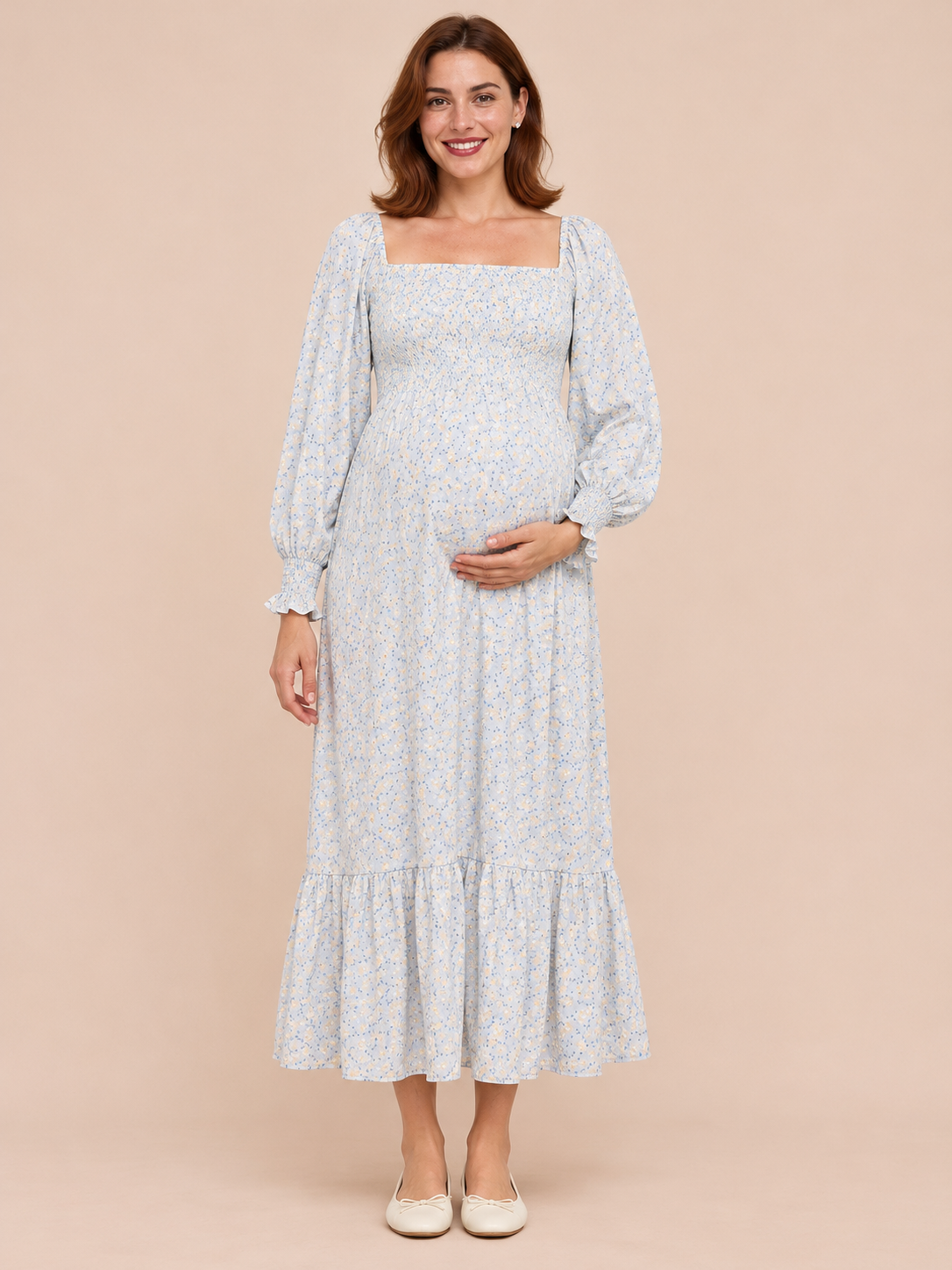
The five dresses here show how much that top bust number can vary even within one shop. Ramona Cocoa Embrace tops out at 37.8 in across its sizes, the Mira Blush Promise goes up to 48 in, and the Fiona Marigold Glow, June Sunshine Promise and Delia Garden Keepsake fall in between, at 44.1 in, 41.7 in and 41.7 in. None of those numbers map onto a pre-pregnancy dress size the same way twice, which is exactly why comparing your own current bust with the chart for the specific dress you want works better than converting a size label.
Stretch also changes how firm that number really is. The Ramona Cocoa Embrace is a high-stretch fabric, so its 37.8 in top bust number has some natural give beyond the measurement itself. A non-stretch style like the Fiona Marigold Glow holds closer to its stated number, so there is less margin if your current measurement sits right at the edge of a size. Check each style's own fabric note on its size and fit page before you decide.
What to Do If You Are Between Two Sizes
If your current bust measurement falls between two sizes on a specific chart, sizing up is usually the more comfortable move, since your measurements are likely to keep changing. Sizing down only makes sense when the fabric has real stretch to spare, as with a high-stretch style like the Ramona Cocoa Embrace.
When your bust measurement and the size you wore before pregnancy point to different sizes, let the bust measurement decide, then read the stretch notes for that style: a knit with stretch is more forgiving than a lined woven bodice. The size chart on each product page lists garment measurements, not body measurements, so the simplest check is to lay a dress that fits you well right now flat and compare its bust and length with the chart.
Related guides
- Maternity Dress Size Guides by Bust and Length
- Do Maternity Dresses Run Big or Small?
- How Many Sizes Up Should You Go for a Maternity Dress?
- Is Maternity Sizing the Same as Regular Sizing?
- Maternity Dress Size Chart: Bust and Length by Style
Ordering for a date? Orders ship in 2–4 business days and arrive 5–8 business days after shipping, about 7–12 business days in total, and shipping is free on every order. Allow at least 3 weeks before your event: enter your date on our Shipping Policy page to see the latest day to order, or contact us before you order if your date is closer.
FAQ
Can I just order my pre-pregnancy dress size?
Not reliably. Compare your current bust measurement with the size chart for the specific dress instead, since maternity brands and cuts vary.
Is there a chart that converts regular sizes to maternity sizes?
Not one we would trust across different brands; the safer method is matching your current measurements to that one style's own chart.
Should I size up if I am between two sizes?
Usually yes, especially if the fabric is not very stretchy, since your measurements are likely to keep changing as you go.
Does fabric stretch matter when I compare the size chart?
Yes. A high-stretch fabric gives some natural give beyond its stated measurement, while a non-stretch fabric holds closer to the number on the chart.
What if my measurements change a lot before my shower?
Measure again closer to the date if you can, and compare that number with the same style's chart rather than relying on an earlier measurement.