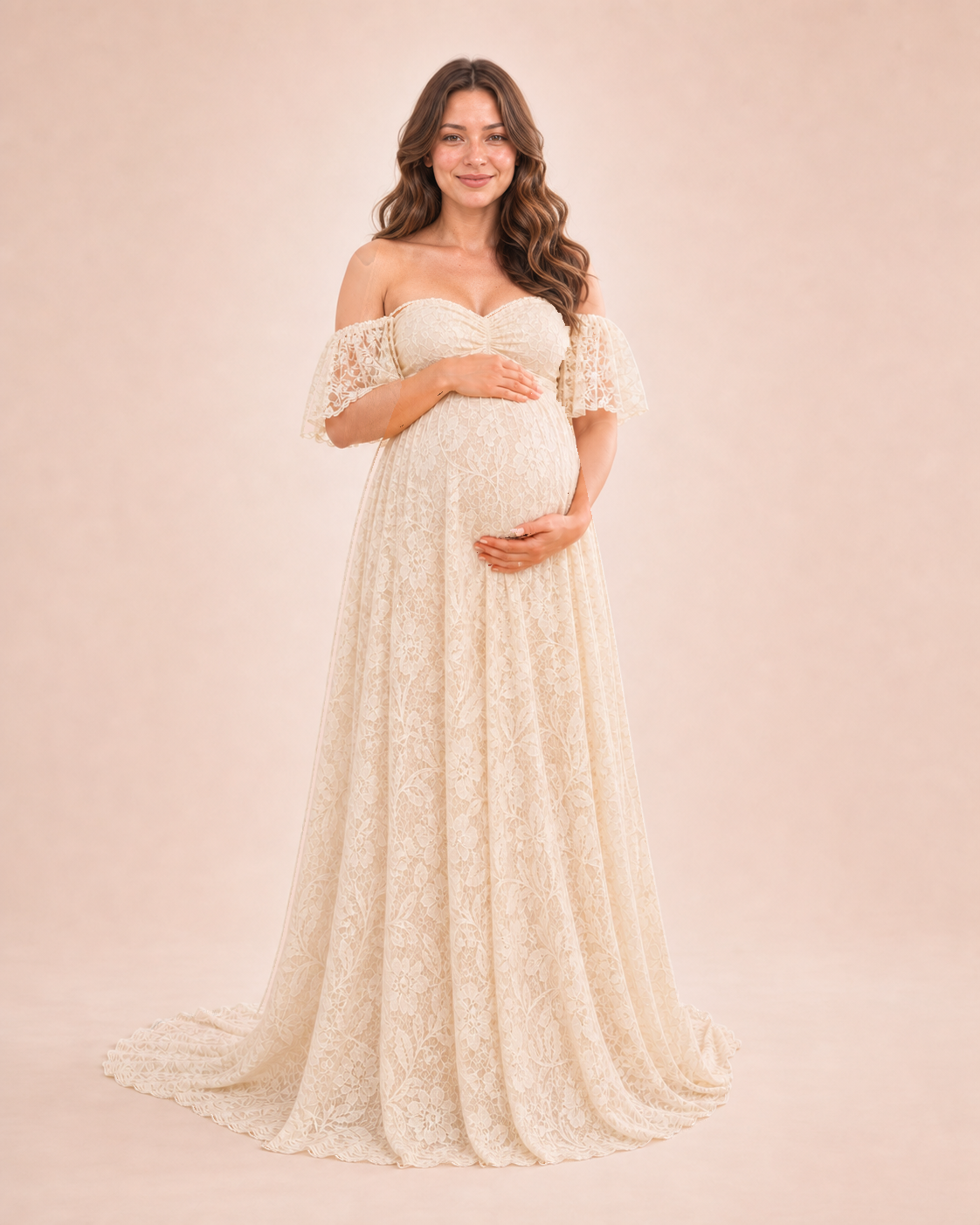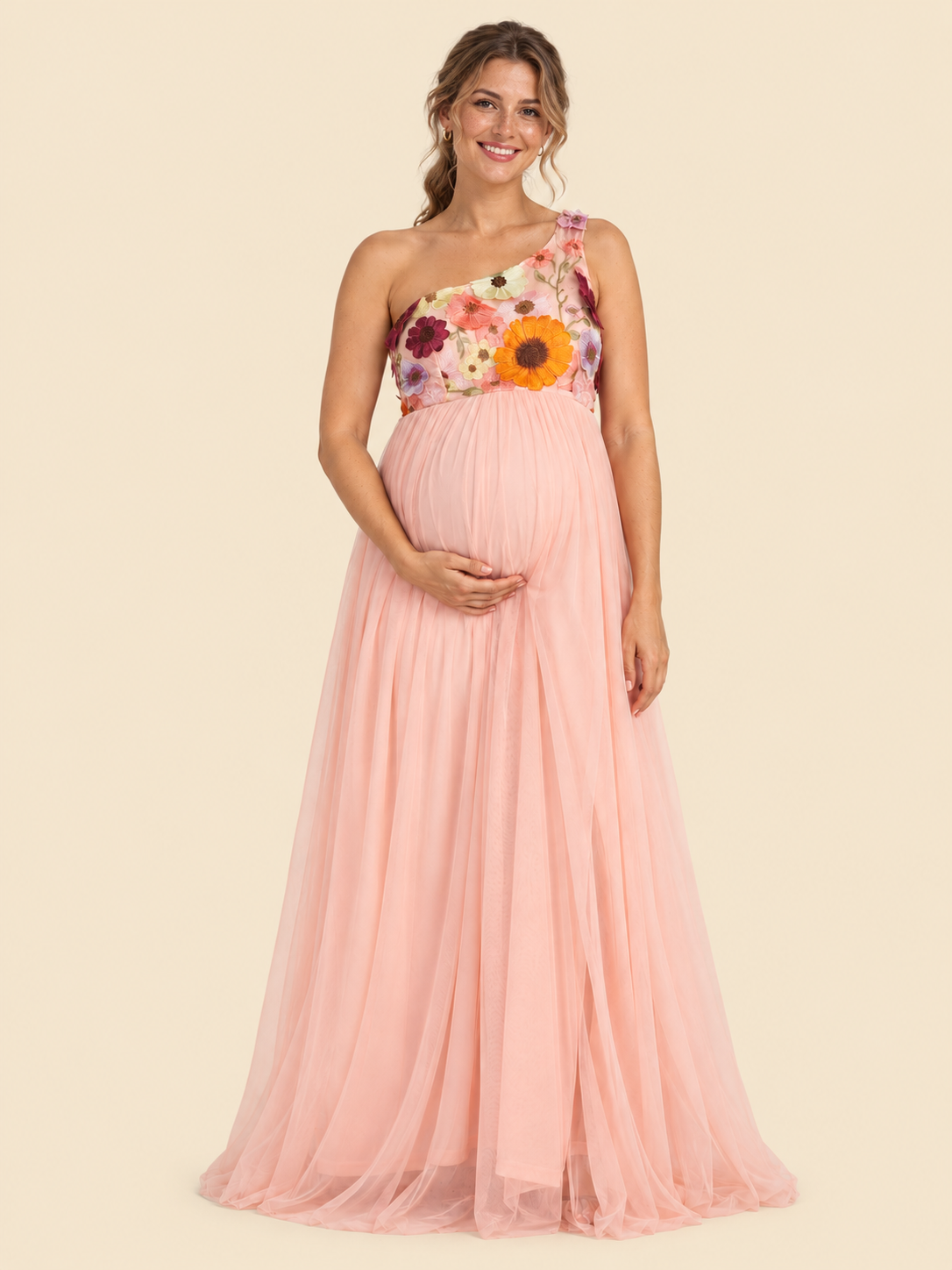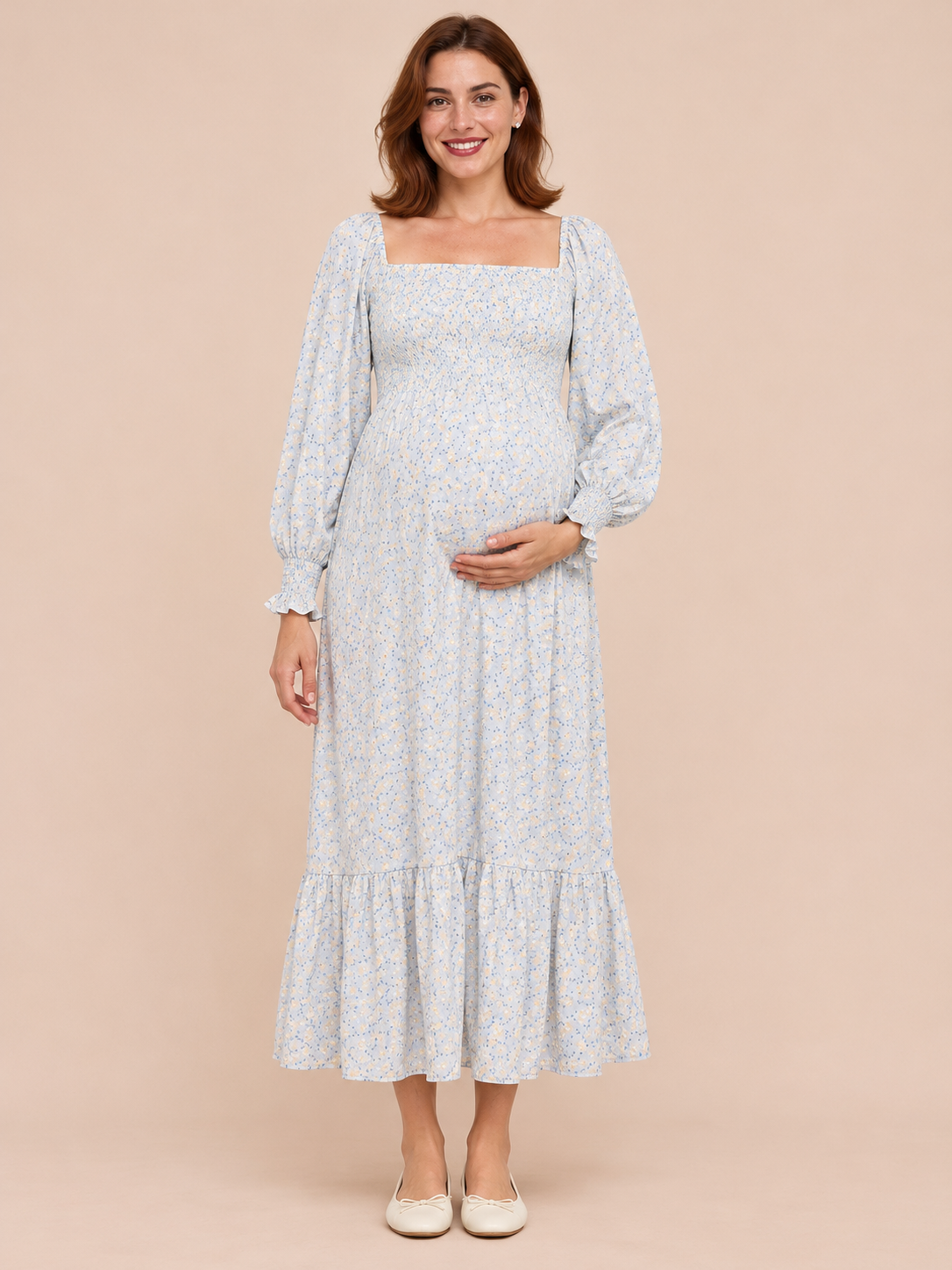
A puff sleeve maternity dress can be a lovely choice for a baby shower, as long as the cuff, upper arm, armhole, and sleeve position work when you move. Before you choose one for a day filled with photos, hugs, and gifts, look beyond the word “puff” and test how the actual sleeve behaves.
Is a Puff Sleeve Maternity Dress Right for a Baby Shower?
Yes—you can wear a puff sleeve maternity dress to your baby shower, and the useful question is whether that particular sleeve lets you enjoy the day without constant readjusting. A dramatic sleeve can frame your face and shoulders in family photos, while the right fit lets your attention stay with the people who came to celebrate you.
Focus on four details rather than judging the silhouette alone:
- Cuff: Find where the sleeve opening sits and whether its structure can be adjusted.
- Upper arm: Notice whether the fabric pinches, presses, or keeps shifting as you move.
- Armhole: Check the seam around your shoulder and underarm when your arms are resting and raised.
- Sleeve position: See whether the sleeve returns to its intended place after a hug or a photo pose.
These checks work for short gathered sleeves, elbow-length balloon sleeves, and long bishop sleeves. The style name describes the look; it does not tell you how much room or adjustability a specific dress offers.
Where Should the Cuff Sit—and Is It Adjustable?
The cuff should sit where the dress is designed to place it without feeling distracting or needing to be moved again and again. First identify whether it lands on the upper arm, near the elbow, or at the wrist; then identify what holds it there.
An elastic cuff, smocked cuff, elastic casing, and adjustable tie are different constructions. “Elastic” means the opening can stretch to some degree, but it does not tell you the usable range, and it does not mean the opening can be adjusted. A tie may offer more control, but only the details for that dress can tell you how it works.
With your arm relaxed, look for a cuff that lies evenly rather than rolling or twisting. Bend your elbow, reach forward, and lift one arm. If the cuff repeatedly travels to a different spot, the gathered fabric bunches sharply, or you want to pull it down after every movement, try another size or construction.
If you are considering a white puff sleeve maternity dress, treat color and sleeve fit as separate decisions. Look for the specific material and lining details, then view the dress in window light and with your phone flash before the event; a pale color or a fabric name alone does not tell you how it will appear in every light.
How Much Upper-Arm and Armhole Room Do You Need?
You need enough room to complete the movements planned for your day without persistent pinching, pulling, or riding up. There is no single upper-arm measurement that works across every dress because the sleeve shape, armhole, seams, and fabric construction work together.
| Area to check | What to notice at rest | What to notice in motion |
|---|---|---|
| Upper arm | The cuff and gathered fabric sit where intended | The opening does not become a repeated distraction |
| Armhole or armscye | The seam lies near its intended position | Reaching does not pull the whole bodice upward |
| Sleeve cap and shoulder seam | The sleeve shape looks balanced on both sides | The cap does not twist sharply after you raise an arm |
| Neckline | It sits as the design intends | It does not shift so much that you need to reset it after each reach |
Try the dress with the undergarments you plan to wear and at roughly the same time of day as your gathering when practical. Your own sense of pressure and movement matters more than a label. If pressure, swelling, heat, or any other physical concern feels unusual, ask your doctor or midwife for personal guidance.
How Should You Test a Maternity Puff Sleeve Dress at Home?
Try three baby-shower movements: raise your arms for a photo, hug someone, and sit down to pick up a gift. After each one, pause before touching the dress and notice what moved on its own.
- Raise your arms: Lift them to about the height you would use for a group photo or to reach for a decoration. Watch the cuff, armhole, shoulder seam, and neckline.
- Give a comfortable hug: Reach forward with both arms. Notice whether the upper sleeve pulls, the sleeve cap rotates, or the bodice rises.
- Sit and reach: Sit in a chair, reach toward a gift, and return upright. Check whether the sleeves settle back without repeated arranging.
Repeat the sequence once while someone takes a few photos. Look at one image in natural light and one with flash, and include a seated angle. You are not trying to hold a formal pose; you are checking whether the dress supports the way you will actually celebrate.
If you want to check the rest of the outfit at the same time, use the full baby shower movement check for sitting, hugging, and opening gifts.
Short or Long Sleeve Maternity Dress: Which Fits the Day?
Choose sleeve length around your venue, indoor temperature, outdoor travel, and planned activities—not the month alone. A long sleeve maternity dress is not automatically warmer, and a short sleeve is not automatically the easier fit.
| Your plan | What to compare | A useful direction |
|---|---|---|
| Mostly indoor brunch or living-room shower | Room temperature, seated time, and how freely you reach | Compare short sleeve maternity dresses with elbow-length options |
| Outdoor arrival, indoor gathering | The sleeve under your coat or wrap and how easily layers come off | Test the complete outfit instead of relying on sleeve length |
| Family photos and a longer holiday meal | Arm movement, cuff placement, fabric and lining information | Browse long sleeve maternity dresses, then compare the exact construction |
A maternity dress with sleeves can feel polished in photos at any length. The helpful choice is the one that fits your route through the day—from the car to the room, from greeting family to sitting at the table.
Can a Maternity Christmas Outfit Use Puff Sleeves?
Yes, a maternity Christmas outfit can use puff sleeves to add shape and occasion to a holiday look. Keep the celebration in view, but give movement and the specific dress details more weight than a seasonal label.
For a Thanksgiving gathering, holiday party, or family portrait, consider how the sleeve will work under a coat, beside a dining table, and during group photos. Lace, tulle, mesh, chiffon, satin, and knit can all create different visual effects, but the fabric name by itself does not establish warmth, stretch, softness, or coverage. Read the material and lining information for the exact style.
You can also let the room guide the styling. A candlelit dinner may suit deeper color and a defined sleeve, while a bright daytime gathering may call for a quieter palette. In either setting, take one natural-light photo and one flash photo before you decide on accessories.
What Should the Product Page Tell You Before You Order?
Before ordering, look for the sleeve type and length, cuff construction, material, lining, closure, and measurements for that specific dress. If an important sleeve detail is missing, ask for it rather than assuming the style name answers the fit question.
- Sleeve description: short, elbow-length, three-quarter, long, balloon, bishop, or another shape.
- Cuff construction: elastic, smocked, tied, fixed, or otherwise described.
- Fit information: relevant garment measurements and the correct size chart for the style.
- Material and lining: what the listing actually states, without reading performance into the fabric name.
- Closure: zipper, tie, pull-on construction, or another method that may affect dressing and movement.
- Your event date: choose for your week of pregnancy at the celebration, not only the day you order.
BabyShowerDress recommends ordering at least three weeks before your event. For help comparing your event week, usual size, and the chart for a particular style, visit Size & Fit Help. You can also read how to choose a maternity baby shower dress for your shower date.
Frequently asked questions
These quick answers focus on what you can observe in the garment and how it moves with you.
My sleeves are too tight. How can I fix them?
Take the dress off rather than trying to stretch the sleeves while wearing it. Check whether the style has a truly adjustable tie; if it does not, compare another size or sleeve construction, or ask a qualified tailor whether an alteration is feasible before the event.
How to tell if a long sleeve is too small?
Raise your arms, reach forward, bend your elbows, and sit. A sleeve may be too small for you in that style if it persistently pinches, pulls the bodice upward, limits your normal reach, or twists and needs resetting after each movement.
How tight should arm sleeves be?
They should stay in their intended position without becoming a repeated distraction. Use your own movement and comfort as the guide rather than looking for a universal amount of tightness.
How do I figure out my sleeve size?
Use the measurements supplied for the specific garment, because standard dress size alone may not describe the sleeve opening or upper arm. If those measurements are not listed, ask the retailer for the garment dimensions and how the cuff is constructed.
Are puff sleeves out of style in 2026?
Puff sleeves remain an available choice in 2026, but a trend label matters less than whether you enjoy the shape and can move easily in the exact dress. Personal style, the setting, and the memories you want from the day are more useful guides.
Your baby shower will move quickly from greetings to photos to gifts, and your dress should let you stay present for all of it. When you are ready to compare silhouettes and sleeve lengths, browse baby shower dresses and use the four arm-fit checks on the styles that feel like you.