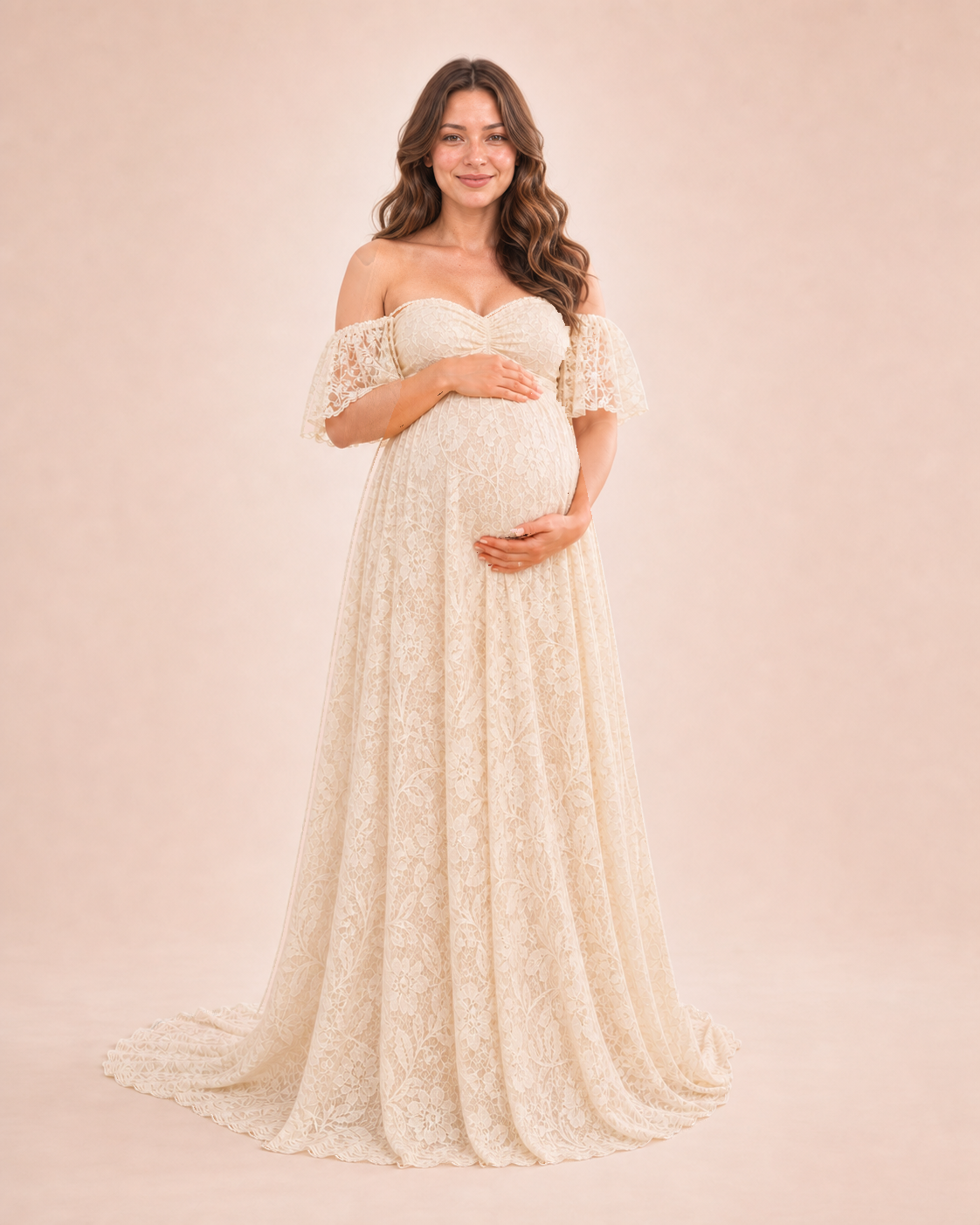
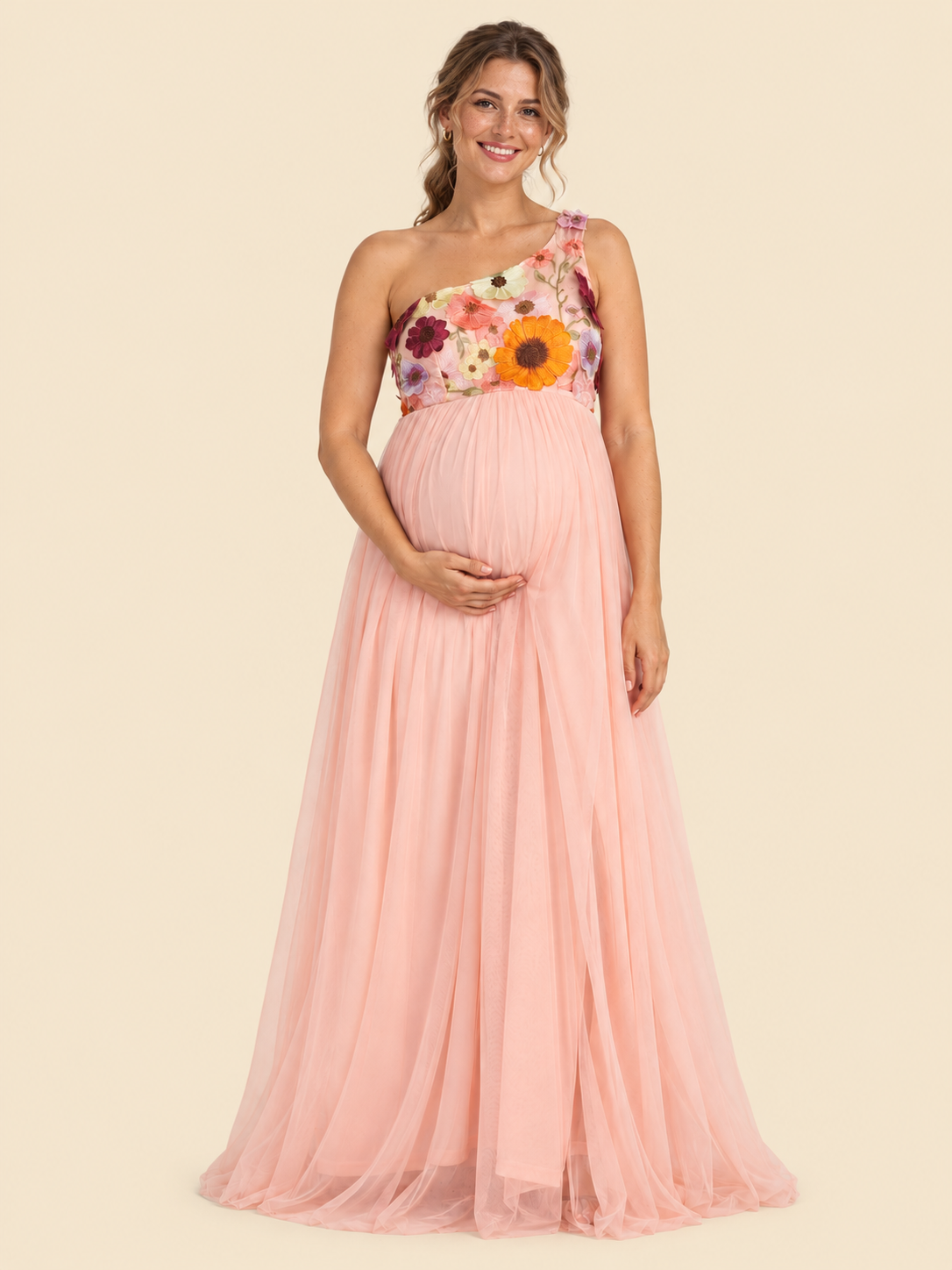
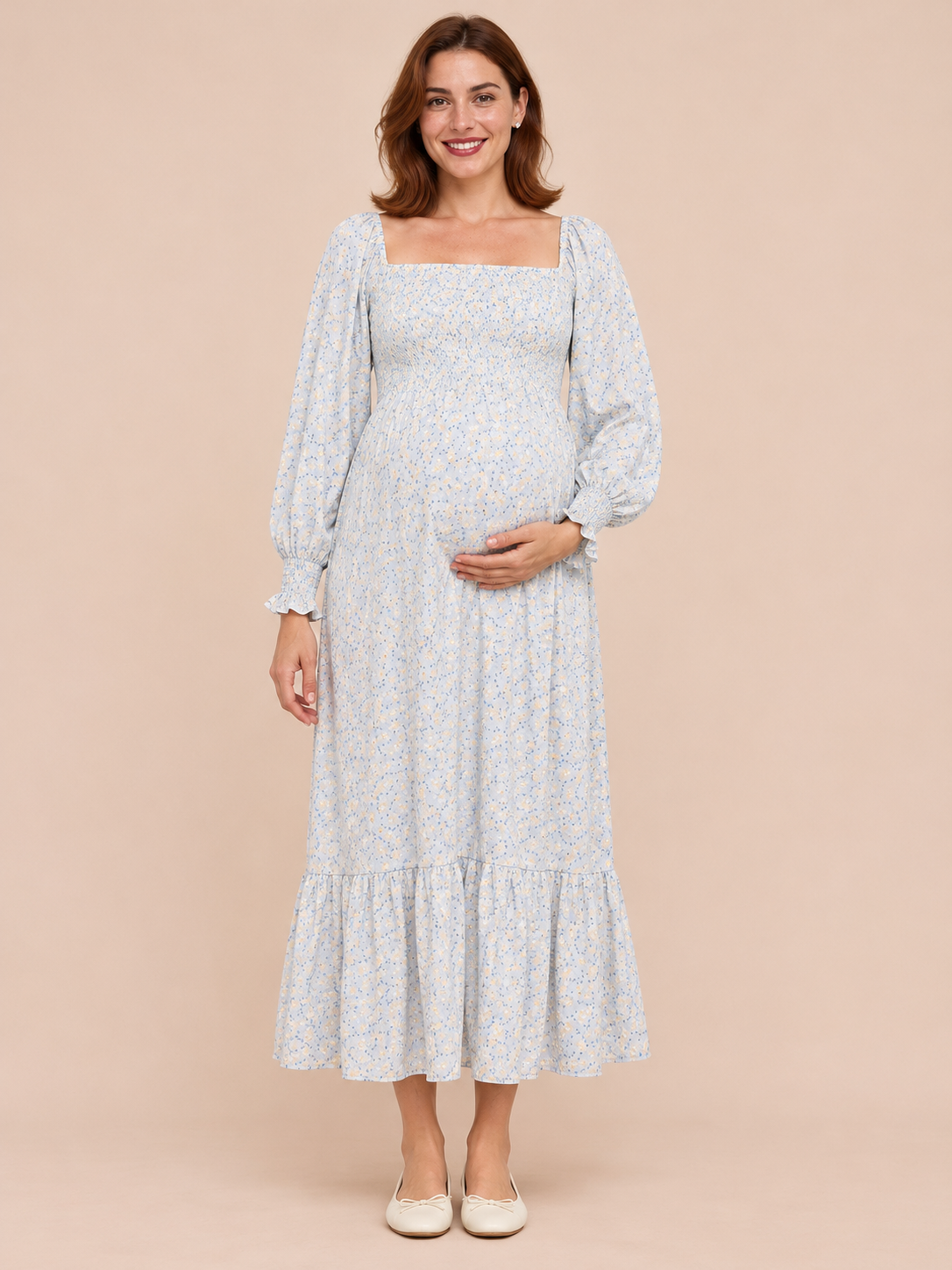
Whether a maternity dress reads as a tent comes down to where it has definition, not whether the fabric is fitted or flowy. A dress with some shape at the shoulders, bust, or waist looks very different from one that hangs straight down from the shoulders with no shape at all, even if both are technically the same length.
Fitted or Flowy: Which One Avoids the Tent Look?
Either one can avoid it, and either one can also fall into it if there is no waist definition anywhere. A fitted knit with stretch follows your shape by default, while a flowy chiffon needs a seam, a tie, or some gathering to mark a waist, since the fabric itself has no structure of its own.
Neither option is the right choice for every stage of pregnancy or every event; it mostly comes down to how much structure you want to feel against you, and how much you want the fabric to move with you versus hold a shape on its own.
What Actually Creates a Tent Shape?
A tent shape happens when fabric hangs from one point, usually the shoulders, straight down over the whole body with nothing marking a waist in between. Without a seam, tie, gather, or stretch that follows your shape somewhere along the way, the dress and the body underneath it read as one undefined block in photos.
This comes down to the construction of the dress, not the body wearing it. A dress with no waist definition reads the same way on anyone it hangs loose on, so the fix is adding definition somewhere in the design, not sizing down or sizing up.
Where Should the Defined Point Sit?
A seam, tie, or gathered panel just under the bust or at a high waist tends to work well in the third trimester, since it sits above the widest part of the bump and lets the fabric flow out from there instead of pulling across it. Ruching or smocking in that same area does similar work without a hard seam, giving a little with your shape instead of resisting it.
| Where the definition sits | What it does | Example |
|---|---|---|
| High waist seam under the bust | Marks a waist and lets the skirt flow from above the bump | Marcella, Caroline |
| Smocked bodice to under the bust | Close through the chest with built-in stretch, flows below | Nell |
| Self-tie sash at the natural waist | Adjustable definition, worn snug or looser | Rhea, Caroline |
| Ribbed knit throughout | Follows your shape without a separate seam | Rhea, Marcella |
Will a Fitted Knit Dress Still Work as Your Bump Grows?
That depends on how much stretch is actually in the fabric, which is worth checking rather than assuming. Rhea's ribbed knit, for example, is 95% polyester and 5% spandex, so it is built to stretch and move with you rather than stay rigid; other knit styles vary in how much give they have, so it is worth checking the fabric content for the specific dress you are looking at.
A self-tie sash or a wrap front, like Rhea's, adds another layer of adjustment on top of whatever stretch is already in the knit, since you can loosen or tighten it as your bump changes from one week to the next instead of committing to one fixed waist position. That combination, stretch plus an adjustable tie, is part of why a fitted style does not have to mean a dress that only fits for a short window.
Fitted Knit or Flowy Chiffon: How Do You Decide?
Think about comfort and the season before you think about which looks better, since both fabrics can be styled with equally clear waist definition. A ribbed knit moves with you and holds its shape through a long day of sitting, standing, and hugging guests, while chiffon breathes more in warm weather and has a softer drape that some moms-to-be prefer later in pregnancy.
If you like a close fit but want room to adjust as the day goes on, a knit with a self-tie sash, like Rhea, lets you set your own waist. If you want more movement and a lighter feel, a chiffon with a smocked or seamed bodice, like Nell or Caroline, gives you that same definition without any stretch at all.
A Few Dresses That Balance Fitted and Flowy
Each of these defines a waist in a different way, then lets the rest of the dress move.
- Rhea, in berry: a wrap V-neckline, a self-tie sash at the waist, and a smooth, body-skimming ribbed knit skirt to the knee.
- Marcella, in blush pink: a fitted ribbed knit bodice to a high waist seam, then a gathered A-line skirt to the lower calf.
- Nell, in apricot floral: a smocked chiffon bodice to just under the bust, then a loose empire skirt with room for the bump and a gathered ruffle hem.
- Caroline, in coral: a sweetheart lining at the bust, a chiffon sash tied at the back, and a gathered chiffon skirt to the floor.
Our knit maternity dresses lean toward the fitted end of this range, and our chiffon maternity dresses lean toward the flowy end, though as these four show, both groups include styles with real waist definition built in. For more on exactly where a high waist seam should sit on your body, we have covered that separately in our guide to empire waist placement.
Ordering for a date? Orders ship in 2–4 business days and arrive 5–8 business days after shipping, about 7–12 business days in total, and shipping is free on every order. Allow at least 3 weeks before your event: enter your date on our Shipping Policy page to see the latest day to order, or contact us before you order if your date is closer.
FAQ
What makes a maternity dress look like a tent?
Fabric that hangs straight from the shoulders with no seam, tie, or gather to mark a waist reads as a tent, regardless of size or body shape underneath it.
Is a fitted or flowy maternity dress better for the third trimester?
Either can work well. A fitted knit follows your shape with stretch, while a flowy style needs a seam or gather at the waist to avoid a shapeless look, and both can include that definition.
Where should the waistline sit on a flowy maternity dress?
A seam, tie, or gathered panel just under the bust or at a high waist tends to work well in the third trimester, since it sits above the bump and lets the rest of the dress flow from there.
What does ruching do on a maternity dress?
Ruching gathers fabric so it gives a little with your shape instead of pulling flat against it, adding texture and some waist definition without a hard seam.